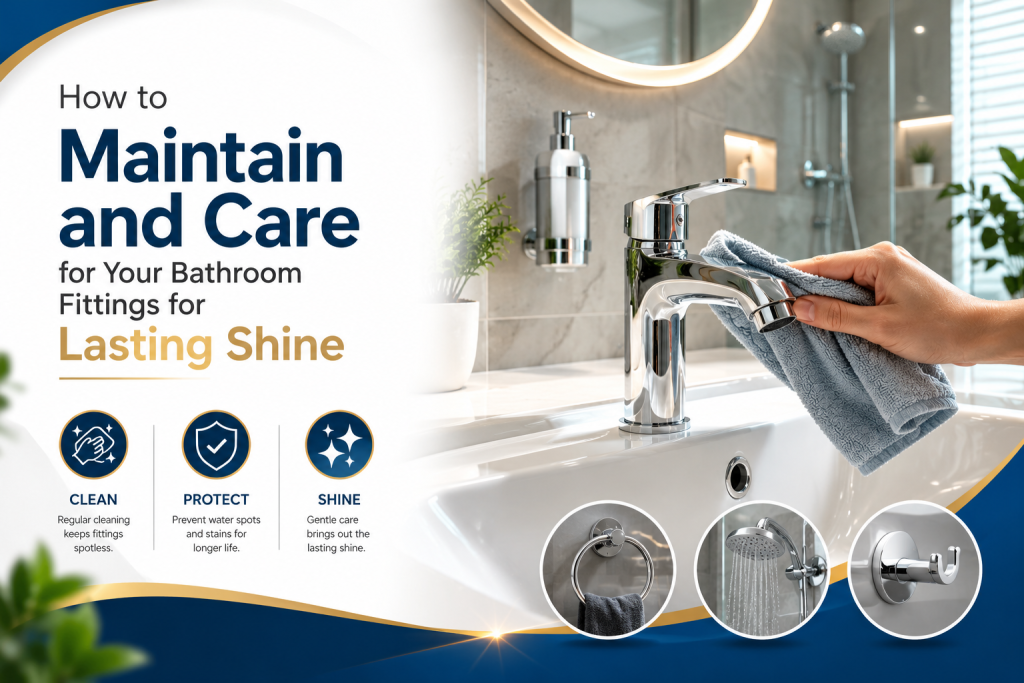
Your bathroom says a lot about your home. It’s the first space you walk into every morning and the last one you visit before bed. And yet, it’s also the most neglected when it comes to upkeep — especially the fittings.
A well-chosen set of bathroom accessories can transform an ordinary bathroom into something that feels genuinely refined. But even the best fittings from the most trusted bathroom fitting suppliers will lose their appeal if you don’t care for them properly.
The good news? Maintaining your bathroom fittings is neither expensive nor time-consuming. With the right knowledge and a simple routine, you can keep your soap dishes, towel racks, toothbrush holders, and robe hooks looking brand new for years — even decades.
This guide covers everything: what each type of fitting needs, why damage happens faster than most people expect, how to clean and protect specific accessories step by step, and when to increase your care schedule based on your bathroom conditions.
What Are Bathroom Fittings and Why Does Their Care Matter?
Bathroom fittings — also called bathroom accessories or bathroom hardware — are the functional and decorative elements that complete a bathroom’s design. This includes your soap dish, toothbrush holder, towel rack, towel rod, paper holder, robe hook, liquid dispenser, napkin ring, and glass accessories.
These items do real daily work. They hold wet items, sit in steamy environments, and get touched with soapy hands dozens of times a day. Without proper care, even high-quality accessories sourced from a reputable bath fitting manufacturer begin to corrode, stain, or lose their finish.
But here is what most homeowners miss: the finish on your fittings is doing most of the work. Whether it’s a chrome plating, a brushed stainless steel surface, a glass coating, or a painted finish — that outer layer is what gives fittings their shine, their corrosion resistance, and their premium look. Once that layer is compromised, the damage accelerates quickly.
Caring for your fittings, then, is really about protecting that finish. Everything else follows from that understanding.
Understanding the Most Common Bathroom Fitting Materials
Before you can care for your accessories properly, you need to know what they are made of. Different materials respond very differently to moisture, cleaning agents, and daily wear.
Stainless Steel
Stainless steel is the most widely used material in modern bathroom accessories, and for good reason. It resists rust, handles humidity well, and has a clean, contemporary look that suits most bathroom styles. Products like a stainless steel soap holder or a stainless steel towel rack are among the most popular choices for both homes and hotels.
The key thing to understand about stainless steel is that it’s not maintenance-free — it’s maintenance-forgiving. It can handle neglect for longer than most materials, but hard water deposits and soap scum still build up and will eventually dull the surface if not cleaned regularly.
Glass
Glass accessories — like a glass soap dish holder or a glass toothbrush holder — bring elegance and visual lightness to a bathroom. They pair beautifully with chrome or brushed metal hardware and are increasingly popular in modern bathroom decor.
Glass, however, is highly susceptible to hard water staining and soap scum. These deposits don’t just look bad — over time they can etch the surface and create permanent haziness. Glass fittings need more frequent attention than steel ones.
Chrome-Finished Accessories
Chrome is a plating applied over brass or zinc alloy. It’s that highly reflective, mirror-like finish you see on many classic bathroom accessories. Chrome looks stunning when clean, but it’s one of the more delicate finishes to maintain.
The chrome layer is thin. Harsh cleaners, abrasive cloths, or even leaving water to air-dry on the surface can cause it to pit, tarnish, or peel. Chrome accessories need gentle, consistent care.
How to Clean and Maintain Each Type of Bathroom Fitting
Now for the practical part. Here’s a fitting-by-fitting breakdown of what actually works — routines used by facility managers in hotels and service apartments who keep hundreds of bathroom fittings looking pristine every single day.
Stainless Steel Soap Holders and Accessories
Stainless steel is forgiving but not invincible. The goal with stainless steel care is to preserve the grain finish and prevent mineral buildup from bonding to the surface.
Daily habit (30 seconds): After your morning routine, give your stainless steel soap holder a quick wipe with a dry cloth or tissue. This takes less than half a minute and prevents 80% of soap and water buildup from forming in the first place.
Weekly clean: Dampen a soft microfibre cloth with warm water and add one small drop of mild dish soap. Wipe the fitting in the direction of the grain — stainless steel has a directional brush pattern, and wiping with the grain prevents visible scratches. Rinse with clean water and dry immediately with a separate cloth.
Never leave stainless steel wet. Air-drying is one of the biggest causes of mineral spots.
Monthly deep clean: For stubborn water spots or soap residue, make a paste using baking soda and a few drops of water. Apply it gently with a soft cloth, leave it for three to four minutes, then wipe in the direction of the grain and rinse thoroughly. Dry completely.
Quarterly polish: Apply a very small amount of mineral oil or food-grade baby oil with a clean cloth. Buff it in gently, then wipe off the excess. This creates a thin protective layer on the steel surface that repels water and restores the original shine. The difference is immediately visible.
Products to avoid absolutely: Bleach, chlorine-based cleaners, steel wool pads, scouring powders, and anything containing hydrochloric acid. These products strip the passive oxide layer that gives stainless steel its corrosion resistance — and that damage is irreversible.
Glass Soap Dish Holders and Glass Accessories
Glass accessories have a high visual impact, but they require consistent attention to stay that way. The main enemies of glass bathroom fittings are hard water minerals and soap scum — and both accumulate faster than you’d expect.
Weekly clean: Mix equal parts white vinegar and water in a small spray bottle. Spray the glass soap dish holder generously and let it sit for two minutes before wiping with a lint-free microfibre cloth. This dissolves fresh mineral deposits without scratching the glass.
For the metal holder or bracket that holds the glass, use a separate damp cloth with mild soap, then dry. Don’t let vinegar contact chrome or brass parts — vinegar is safe on glass but can dull metal finishes with repeated exposure.
For heavy soap scum buildup: Apply a thin layer of baking soda paste (baking soda plus a few drops of water) directly onto the scum-affected areas. Leave it for five minutes. Then wipe gently with a soft cloth — not a scrubbing pad — and rinse. Repeat once if needed.
The professional’s trick: After cleaning your glass accessories to a pristine state, apply a thin layer of car-windshield rain repellent product to the glass surface. It sounds unconventional, but the hydrophobic coating causes water droplets to bead and run off instead of sitting and evaporating. The result is dramatically less mineral buildup between cleans. Reapply once every two to three months.
What to avoid: Rough cloths, scrubbing sponges, and abrasive powders. Even “non-scratch” scrubbing products leave micro-abrasions on glass that create permanent dullness over time.
The Maintenance Schedule You Can Actually Stick To
| Fitting | Daily | Weekly | Monthly | Quarterly |
|---|---|---|---|---|
| Stainless Steel Soap Holder | Dry wipe | Mild soap + dry | Baking soda paste | Oil polish |
| Glass Soap Dish Holder | — | Vinegar spray + lint cloth | Anti-scum clean | Hydrophobic coat |
| Towel Rack / Towel Rod | — | Wipe & dry | Inspect brackets + polish | Check wall fixings |
| Robe Hook | — | Wipe tip & base | Inspect finish | Clear lacquer if chipping |
| Paper Holder | — | Disinfect wipe | Clean spindle | — |
| Liquid Dispenser | — | Wipe exterior | Flush internal pump | — |
| Toothbrush Holder | Rinse inside | Vinegar soak | Bottle brush clean | — |
| Napkin Ring | Dry wipe | — | Polish | — |
How to Choose Long-Lasting Bathroom Fittings from the Start
Maintenance is far easier when your fittings are made from the right materials in the first place. Here’s what to look for when purchasing from bathroom fitting suppliers.
For stainless steel items: Ask whether the product uses 304-grade or 316-grade stainless steel. Grade 316 contains molybdenum, which provides superior resistance to chloride corrosion — important in humid, coastal, or highly chlorinated water environments.
For chrome-finish accessories: Ask about the plating thickness. Quality chrome plating should be at least 0.25 microns on top of a nickel undercoat. Thinner plating corrodes significantly faster.
For glass accessories: Tempered glass is far stronger and safer than standard glass. All glass bathroom accessories should be tempered — if the product description doesn’t mention it, ask before purchasing.
For all bathroom accessories: Reputable bathroom decor accessories suppliers will provide product specifications, material grades, and finish details. If a supplier can’t tell you what their fittings are made of, that’s a red flag.
Veltrix, based in Rajkot with over 21 years of manufacturing experience, produces bathroom accessories across all major categories — from glass soap dish holders and double soap dishes to towel racks, robe hooks, paper holders, napkin rings, and liquid dispensers. Their fittings are designed to meet the specific demands of Indian bathroom environments, including hard water areas and high-humidity conditions.
Common Mistakes That Damage Bathroom Fittings Prematurely
- Using bleach on metal fittings. Bleach is extremely corrosive to most metal finishes. Many people reach for bleach when they see staining or discolouration, but on chrome, stainless steel, or brass, it accelerates the exact damage they’re trying to fix.
- Leaving fittings wet after cleaning. Rinsing without drying immediately defeats the purpose of cleaning. The clean water still contains dissolved minerals that will re-deposit as it evaporates.
- Using the wrong cloth. Paper towels leave fibres and are mildly abrasive. Coloured cloths can transfer dye. Sponge scrubbers scratch. The right choice is always a white, soft microfibre cloth — they lift grime without abrading the surface.
- Ignoring mounting points. The fitting itself may look perfect while the bracket holding it to the wall is silently corroding. Once a bracket fails, it often takes the wall surface with it. Checking brackets takes thirty seconds a month.
- Over-tightening during installation. When fittings are first installed, over-tightened screws can crack wall plugs or strip threads. A loose screw that becomes tighter over time is also a sign of wall movement — worth monitoring.
- Mixing cleaning products. Never apply two different cleaning products simultaneously or in quick succession without rinsing thoroughly. Some combinations — bleach and acid-based cleaners, for example — produce harmful fumes and chemically attack surfaces.
Final Takeaway: Make Shine a System, Not an Effort
The bathrooms that look consistently beautiful aren’t the ones with the most expensive fittings. They’re the ones where someone has built a simple, sustainable care routine and stuck to it.
You don’t need specialist products or hours of effort. You need a microfibre cloth, mild dish soap, a spray bottle with diluted vinegar, and a habit of wiping things dry after use. That’s genuinely the foundation of 90% of excellent bathroom fitting care.
Start with what you have. Pick one fitting that’s been neglected — your glass soap dish holder, your stainless steel soap holder, or your towel rack — and spend five minutes on it today. Notice the difference. Then build from there.
And when the time comes to add new accessories or replace used ones, choose from bathroom fitting suppliers who are transparent about their materials, experienced in manufacturing, and committed to quality. That investment, combined with the care you now know how to provide, is what produces a bathroom that truly lasts.
Frequently Asked Questions
Q1. How often should I clean my bathroom fittings?
For most bathrooms, a daily dry wipe and a proper weekly clean is sufficient. If your area has hard water or your bathroom has poor ventilation, increase to every three to four days for glass accessories and stainless steel surfaces. Monthly deep cleans and quarterly polishing apply to all fitting types.
Q2. Can I use vinegar on all bathroom fittings?
White vinegar diluted with equal parts water is safe on glass and stainless steel surfaces. However, avoid using it on chrome-plated or brass-finished fittings, as repeated exposure can dull and corrode those finishes. Always use a separate cloth with mild soap for metal brackets when cleaning a glass soap dish holder.
Q3. Why does my stainless steel soap holder get white spots even after cleaning?
White spots are mineral deposits left by hard water as it evaporates. The fix is simple: always dry your stainless steel soap holder immediately after cleaning or after water contact. For existing spots, use a baking soda paste, wipe along the grain, and finish with a light coat of mineral oil to create a protective barrier.
Q4. What’s the safest cleaner to use on chrome bathroom accessories?
Mild dish soap diluted in warm water works for regular cleaning. For light tarnish, non-gel, non-whitening toothpaste applied with a soft cloth and rinsed off works well. Never use bleach, scouring powder, or acidic cleaners on chrome — they strip the plating permanently.
Q5. How do I stop my glass soap dish holder from getting hazy so quickly?
Two things help significantly. First, clean it weekly with a vinegar-water solution to dissolve mineral deposits before they bond. Second, after cleaning, apply a thin coat of car windshield rain repellent to the glass surface. This creates a hydrophobic barrier that repels water and dramatically slows the rate of mineral buildup. Reapply every two to three months.
Q6. When should I replace bathroom fittings instead of trying to maintain them?
Replace fittings when rust has penetrated below the surface finish, when chrome is visibly bubbling or peeling in layers, when glass accessories have structural chips near mounting holes, or when mounting brackets are loose and cannot be re-tightened. Surface staining and minor tarnish are always fixable — structural compromise and deep corrosion are not.