Quick Summary
- Quality testing ensures bathroom accessories stay strong and durable over time.
- Proper testing prevents rust, corrosion, and early product failure.
- Load and strength tests improve safety for daily bathroom use.
- Finish testing protects appearance from peeling and discoloration.
- Well-tested accessories offer long-term value and buyer confidence.
Bathroom accessories might seem straightforward at first, but their true quality depends on what goes on during manufacturing. Products such as towel bars, soap dispensers, shelves, and paper holders are used daily and face constant exposure to moisture, weight, and frequent handling. That’s why quality testing in bathroom accessories production has a direct impact on how well these items perform over time.
When proper testing is skipped, even stylish or high-end accessories can start to fail sooner than expected. Rust can develop, fittings may loosen, and parts can weaken with regular use. For manufacturers, thorough testing helps maintain consistent quality, enhance safety, and deliver dependable products. For buyers, it means investing in bathroom accessories that last longer and provide real value. This article looks at why quality control in bathroom accessories manufacturing is important, the testing processes involved, and how buyers can identify products that have been properly tested.
What Is Quality Testing in Bathroom Accessories
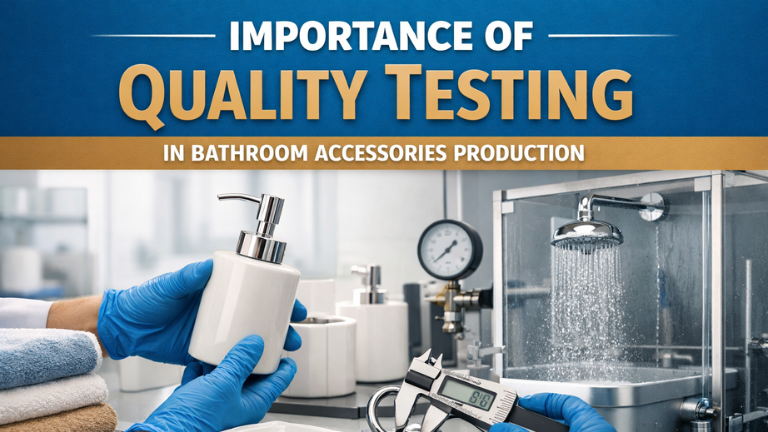
Quality testing in bathroom accessories is the process of checking products at different stages of manufacturing to ensure they work the way they should. These checks focus on key factors such as strength, durability, surface finish, and overall performance before the product is ready for sale.
Instead of judging quality by appearance alone, proper testing looks at how bathroom accessories perform in real-life use. Since bathrooms are exposed to constant moisture, even a small flaw can eventually cause rust, peeling finishes, or weakened structures. This is why quality testing for bathroom accessories is an essential part of modern manufacturing, helping ensure products stay reliable and long-lasting rather than just looking good on day one.
Types of Bathroom Accessories That Require Quality Testing
Almost every bathroom fitting requires testing, but the testing methods may vary based on usage and material. Common bathroom accessories that undergo strict quality checks include:
- Towel rods, towel rings, and robe hooks
- Soap dispensers and soap dishes
- Paper holders and toilet roll holders
- Bathroom shelves and corner racks
- Wall-mounted accessories and brackets
Each of these products carries different load requirements and exposure levels. For example, shelves require load-bearing strength testing, while hand soap dispensers need coating and corrosion resistance testing. Proper testing ensures that all bathroom accessories meet functional and safety expectations.
Key Objectives of Quality Testing in Production
The primary goal of quality testing is to ensure long-term functionality and not just detect problems. Some key objectives include:
- Provide durability and structural strength.
- Protecting against corrosion, rust, and finish damage.
- Maintaining regular size, shape, and alignment.
- Reduced product failures, returns, and complaints.
- Meets industry standards and buyer expectations.
By implementing quality control in bathroom accessories manufacturing, producers can maintain consistency across batches and build trust with distributors, contractors, and end users.
Quality Testing Methods Used in Bathroom Accessories Manufacturing
Manufacturers use multiple testing techniques to evaluate product performance under realistic conditions. Each test focuses on a specific risk area commonly associated with bathroom environments.
Load and Strength Testing
Load and strength testing determines how much weight a bathroom accessory can safely support without bending, loosening, or breaking.
- Towel bars and shelves are tested under simulated load conditions
- Robe hooks and paper holders undergo repeated stress testing
- Mounting points and fasteners are checked for stability
This type of testing ensures that bathroom accessories remain safe and functional during daily use, especially in residential and hospitality settings.
Corrosion and Rust Resistance Testing
Bathrooms are humid spaces, making rust resistance testing one of the most important quality checks.
- Salt spray testing simulates long-term exposure to moisture
- Humidity chamber tests evaluate corrosion behavior
- Metal surfaces are examined for oxidation and pitting
These tests help verify whether stainless steel, or coated metal bathroom accessories can withstand prolonged moisture exposure without deterioration.
Finish and Coating Testing
A high-quality finish improves appearance and protects the base material. Finish and coating testing ensures long-lasting visual appeal.
- Adhesion tests check how well coatings bond to the surface
- Scratch and abrasion resistance tests measure wear durability
- Thickness tests confirm uniform coating application
Chrome-plated, matte, and PVD-coated bathroom accessories must pass these tests to avoid peeling, fading, or discoloration over time.
Dimensional Accuracy Testing
Precision matters, especially for wall-mounted bathroom fittings. Dimensional accuracy testing ensures that each component matches design specifications.
- Measurements are taken using precision instruments
- Alignment and symmetry are checked
- Compatibility with standard fittings is verified
Accurate dimensions help ensure easy installation, proper alignment, and consistent appearance across all bathroom accessories.
Material-Based Quality Testing
Different materials require different testing approaches to ensure performance and longevity.
- Stainless steel testing focuses on corrosion resistance and strength
- Zinc alloy testing evaluates hardness and surface stability
- Glass and ceramic testing checks impact resistance and thickness
- Plastic and polymer testing ensures flexibility and crack resistance
Material specific testing plays a key role in ensuring that bathroom accessories perform reliably under daily use conditions.
Role of Quality Testing at Different Production Stages
Effective quality testing is not limited to the final product, it happens throughout the production process.
- Raw material inspection ensures material purity and consistency
- In-process testing detects defects during casting, machining, or coating
- Final inspection verifies performance, appearance, and packaging readiness
This staged approach reduces manufacturing errors and improves overall product reliability.
Common Quality Issues Without Proper Testing
When quality testing is skipped or minimized, bathroom accessories are more likely to develop issues such as:
- Rusting and corrosion within months
- Loose fittings and poor load support
- Peeling or uneven surface finishes
- Misaligned components and installation problems
These problems not only affect product performance but also damage brand reputation and customer trust.
Benefits of Strong Quality Testing for Manufacturers and Buyers
Strong quality testing benefits everyone involved in the supply chain.
For manufacturers:
- Fewer product failures and warranty claims
- Better consistency across production batches
- Stronger brand credibility and market reputation
For buyers:
- Longer-lasting bathroom accessories
- Reduced maintenance and replacement costs
- Improved safety and visual appeal
Well-tested bathroom fittings offer long-term value and peace of mind.
How Buyers Can Identify Well-Tested Bathroom Accessories
Buyers can identify high-quality bathroom accessories by looking for clear indicators of testing and quality assurance.
- Product descriptions that mention load testing or corrosion resistance
- Use of tested materials like stainless steel
- Consistent finish with no visible defects
- Manufacturer warranties and quality certifications
Asking suppliers about quality control processes in bathroom accessories production can also help buyers make informed decisions.
Conclusion
Bathroom accessories may look simple, but their manufacturing quality determines how well they perform over time. From raw material selection to finishing and testing, every step impacts durability, safety, and appearance. High-quality accessories are built to handle daily use, moisture, and regular cleaning without losing strength or finish.
Choosing a trusted manufacturer of bathroom accessories brands like Veltrix ensures long-lasting performance, minimal maintenance, and a consistently refined look. Whether it’s a stainless steel soap holder, glass soap dish holder, or robe hooks, well-manufactured accessories offer better value and reliability for modern bathrooms.