A client called us last year, because the “luxury” soap dish she’d bought six months earlier had already gone dull and spotty near the drain holes. She’d paid a premium price for it too. When we asked what it was made of, she genuinely didn’t know. Nobody had told her, and to be fair, she hadn’t thought to ask.
That’s the actual problem with most bathroom accessory shopping in India. Glass, brass, and stainless steel all show up in showrooms wearing near-identical finishes, all claiming to be the premium pick, and there’s rarely anything on the shelf telling you which one you’re actually buying. They don’t behave the same way once they’re installed. Humidity, hard water, and daily use wear each of them down differently, and some materials just aren’t built for what an Indian bathroom throws at them day after day.
This is written for anyone shopping for modern bathroom accessories who wants to know what actually earns the word “luxury,” rather than just carrying the price tag for it.
What Makes a Material Suitable for Luxury Bathroom Accessories?
Three things, really. It has to hold its finish under humidity. It has to resist corrosion from hard water, which varies a lot depending on where in India you live. And it needs to still look the way it did on day one, three years later, not just for the first few months.
Glass, brass, and SS304-grade stainless steel clear that bar, assuming they’re actually manufactured to spec and not cut with a cheaper alloy somewhere along the way. Plated mild steel almost never does. It looks fine in the showroom and starts failing within a year, which is exactly what happened to our client’s soap dish.
| Material | Corrosion Resistance | Typical Lifespan | Best Suited For | Price Range |
| SS304 Stainless Steel | High | 8–10 years+ | Towel bars, racks, brackets | Mid-range |
| Toughened Glass | High, doesn’t corrode | 6–8 years, chip-resistant | Soap dishes, toothbrush holders | Mid-range |
| Brass | Moderate, needs upkeep | 10+ years with care | Taps, showers, traditional fixtures | Higher |
| Chrome-Plated Mild Steel | Low | 1–2 years | Budget-only fittings | Lowest |
Why Stainless Steel Has Taken Over Most Indian Bathrooms
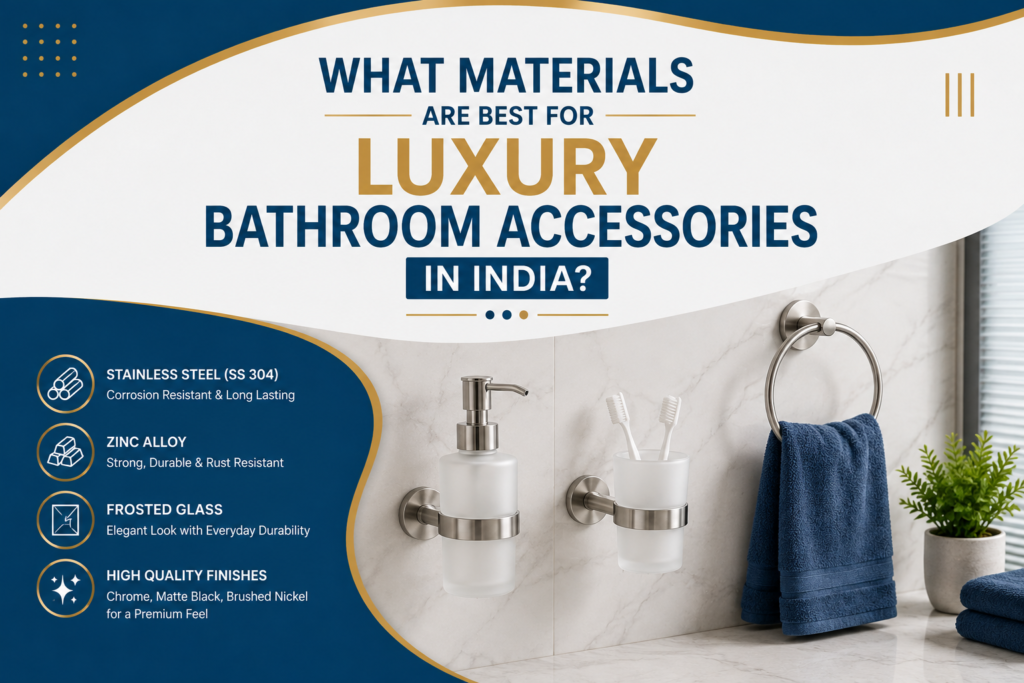
Stainless steel bathroom accessories have become the default choice across most Indian homes for one simple reason: they handle hard water and humidity better than almost anything else on the market. SS304-grade steel resists rust, doesn’t discolor, and keeps its shine without constant polishing, which matters in a country where water hardness varies wildly from city to city.
There’s a cost angle too, and it’s a fair one. Steel comfortably undercuts brass on price while still beating chrome-plated fittings on durability. That’s really the whole reason most manufacturers, us included, lean on it for standard ranges.
Which Material Suits Which Type of Bathroom Accessory?
Not every fitting benefits from the same material, and matching the right one to the right piece makes a real difference over time.
- Glass works best for soap dishes and toothbrush holders, where transparency helps a small bathroom feel less cluttered and makes it obvious when a piece needs cleaning.
- Stainless steel suits towel bars, racks, and anything load-bearing, since it holds weight and shape without warping under daily stress.
- Brass fits taps, showers, and fixtures where a heavier, more traditional weight and feel is part of the appeal, especially in classic or transitional bathroom styles.
- Chrome-plated fittings work fine for budget projects, but they’re the first to show wear in a genuinely luxury setup, so they rarely belong in one.
How Do You Know a Manufacturer Is Actually Using Genuine Materials?
Ask for the exact grade. Not “steel,” not “brass,” the actual grade number. For stainless steel that means SS304 specifically, and for a bulk order, ask for a material test certificate to confirm it. For glass, ask whether it’s toughened or tempered, because regular glass chips far more easily under everyday use than most people expect.
There’s also a low-tech trick that works surprisingly well: pick it up. Genuine brass and steel fittings feel noticeably heavier than plated imitations of the same size. There’s no hollow shortcut hiding under a real piece.
When Should You Choose Glass Over Steel for Bathroom Fittings?
Glass works when the bathroom leans minimalist and you want fittings that feel light against white or pale tiles, rather than heavy. It also suits smaller bathrooms, since transparent pieces don’t visually crowd a tight counter the way solid materials can.
Steel wins once the fitting has to bear real weight every day, a towel bar being the obvious example, or when the bathroom’s used by more than one or two people and needs to be closer to indestructible than delicate.
Can Bathroom Accessories Manufacturers in India Match International Material Standards?
Yes. This is one area where the gap has genuinely closed. Manufacturers based in hardware hubs like Rajkot now work with the same SS304-grade steel and tempered glass that international brands use, usually at a lower price and with much faster access to replacement parts when something eventually needs swapping out.
We source SS304 stainless steel and tempered glass for our full accessory range at Veltrix, including double soap dish and toothbrush holder sets, and we manufacture everything in-house rather than assembling parts sourced from three or four different vendors. It’s a slower way to run a factory, honestly, but it’s the only way we’ve found to keep finish and quality consistent order after order.
Should You Buy Bathroom Accessories From a Local Supplier or Import Them?
For most Indian homes, buying from a local bathroom accessories supplier makes more practical sense than importing. A local supplier understands regional water hardness, can match finishes across a full accessory set, and can usually replace a single damaged piece without you needing to reorder the entire collection.
Imported pieces look impressive in photos, but replacement parts and warranty support become genuinely difficult once the piece is installed and something eventually needs fixing. For everyday luxury bathrooms, not showroom displays, a reliable local supplier tends to hold up better over the years that actually matter.
Conclusion
Getting this right in an Indian home comes down to matching material to fitting: glass where you want lightness and visibility, stainless steel where you need strength that survives daily use, brass where warmth and weight matter more than either. Get that match right and the bathroom holds its finish for years instead of needing a redo at every renovation cycle.
Veltrix manufactures modern bathroom accessories from our facility in Rajkot, working with architects, interior designers, and homeowners across India as a bathroom accessories supplier and one of the established bathroom accessories manufacturers in the region. Whether you need a double soap dish supplier for one bathroom or a full bulk order for a project, ask whoever you buy from to confirm the material grade before you commit. We’re happy to, and honestly, any manufacturer worth buying from should be too.
Frequently Asked Question
Q1: What’s the most durable material for bathroom accessories in India?
SS304-grade stainless steel, generally, across the range of water hardness and humidity you get in Indian homes.
Q2: Is glass a good choice for a humid bathroom?
Yes, provided it’s toughened or tempered rather than standard glass, since tempered glass resists chipping and cracking under daily use without corroding the way some metals do in hard water.
Q3: Are brass accessories worth the higher price?
For taps and fixtures where weight and a traditional feel matter, usually yes. Brass ages well and a lot of homeowners actually prefer the look it develops over time, though it does need more regular polishing than steel.
Q4: How do I tell if a stainless steel accessory is genuinely SS304?
Ask for a material test certificate, and pick it up. SS304 fittings feel noticeably heavier than plated mild steel of the same size.
Q5: Do luxury bathroom accessories cost a lot more than standard ones?
Somewhat, usually 20 to 40% more depending on material and finish, though genuine materials rarely need replacing due to rust the way cheaper alternatives do, so it tends to even out.