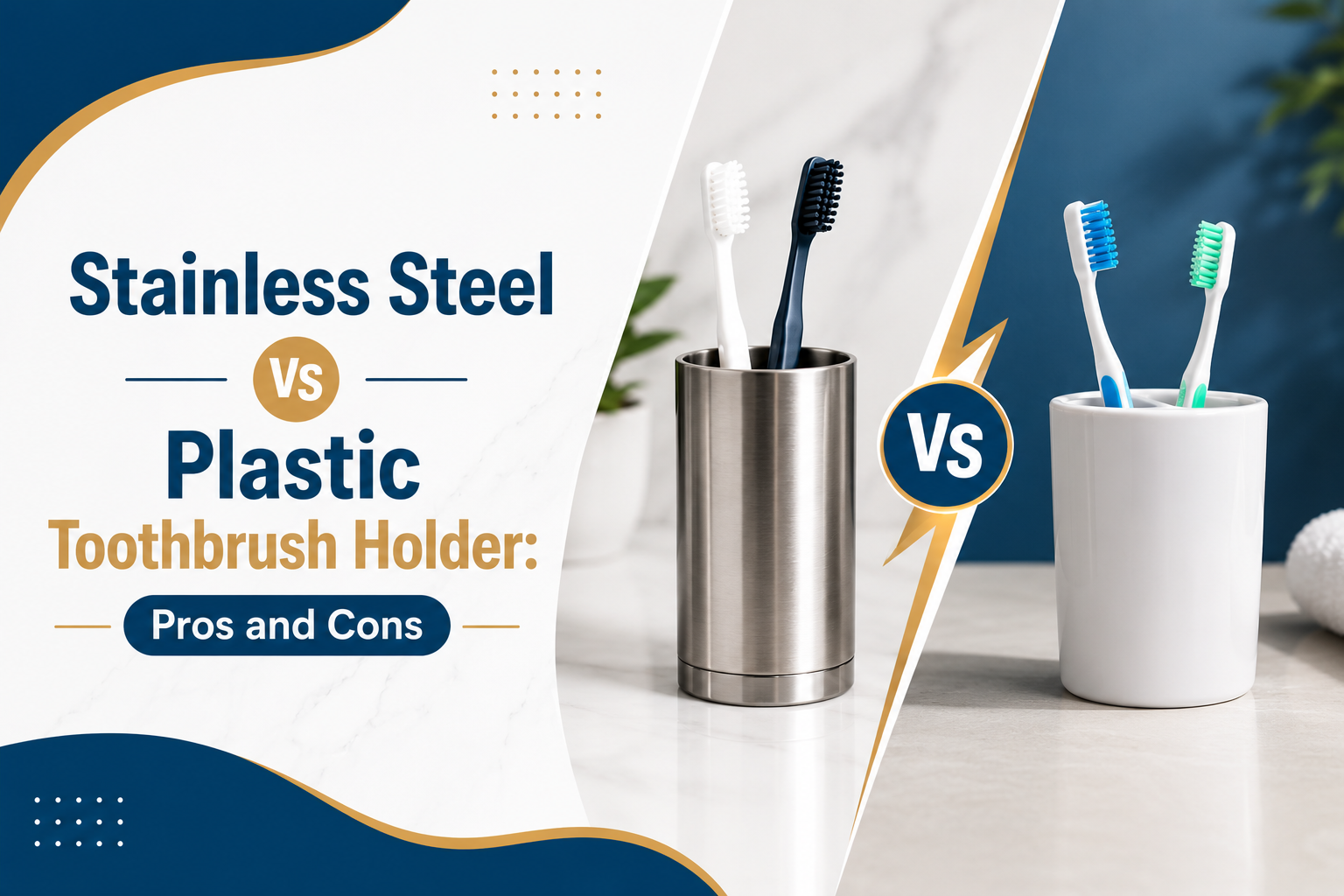
Stainless Steel vs Plastic Toothbrush Holder: Pros and Cons

Walk into any hardware store or scroll through any bathroom accessories page and you will find two broad categories of toothbrush holders: metal ones that look sharp and cost more, and plastic ones that are cheap and available everywhere. The question most people actually want answered is simple: is the price difference worth it, or does plastic do the job just as well?

This post gives you the honest answer, based on how each material actually performs in a real bathroom, day after day.

What Is the Main Difference Between a Stainless Steel and Plastic Toothbrush Holder? 

A stainless steel toothbrush holder is made from corrosion-resistant metal that handles humidity well, holds its finish for years, and stays hygienic with minimal cleaning. A plastic holder is lighter and cheaper but tends to discolour, crack, and develop a soap residue film over time.

The difference is not just about looks. It’s about how each material responds to the one thing a bathroom produces constantly: moisture. A toothbrush holder in a humid bathroom is exposed to steam, splashing water, and daily handling every single day of the year. What it’s made from determines how it holds up after month six, year two, and year five.

What Are the Pros of a Stainless Steel Toothbrush Holder?

Stainless steel toothbrush holders resist rust, don’t absorb bacteria, stay easy to wipe clean, and maintain their finish in humid bathrooms far longer than plastic. They also look more premium, which makes them a natural fit alongside modern bathroom accessories.

Here’s what stainless steel does well:

  • Rust resistance: Good quality stainless steel, particularly 304-grade, doesn’t corrode in humid bathrooms even after years of use
  • Hygiene: The surface doesn’t develop the faint biofilm that plastic tends to build up over time
  • Durability: It won’t crack, warp, or yellow, which are the three most common ways plastic holders fail
  • Finish options: Available in chrome, matte black, gold, and rose gold, so it matches bathroom fittings naturally
  • Weight and stability: Heavier than plastic, which means a wall-mounted steel holder stays firmly in place rather than wobbling

The main trade-off is cost. Stainless steel holders cost more than plastic ones upfront, but they typically don’t need replacing for years, which makes the maths work out over time.

What Are the Cons of a Stainless Steel Toothbrush Holder?

No material is perfect. A few honest downsides worth knowing:

  • It costs more than plastic at the point of purchase
  • Poor quality metal finishes, usually zinc alloy disguised as stainless steel, can corrode badly and look worse than plastic after a year
  • Heavier weight means installation needs to be done properly, with proper anchoring into the wall, not just surface adhesive

The last point matters. A wall-mounted stainless steel holder that’s properly drilled and anchored will last years. One stuck up with adhesive tape will eventually pull away from the tile, often taking a chunk of paint or grout with it.

What Are the Pros of a Plastic Toothbrush Holder?

Plastic has genuine advantages, and it’s worth being fair about them:

  • Low cost: The most affordable option available, often a fraction of the price of metal
  • Lightweight: Easier to install, and some designs work with adhesive mounting that avoids drilling
  • Wide availability: Found in nearly every price range and style
  • Good for temporary use: If you’re renting, fitting out a guest bathroom temporarily, or need a short-term solution, plastic makes sense

For a guest bathroom that sees occasional use, a budget plastic holder does the job without any real complaint.

What Are the Cons of a Plastic Toothbrush Holder?

This is where the honest answer gets important. Plastic works fine initially, but it has some consistent failure patterns in bathrooms:

  • Discolouration: White and light-coloured plastic yellows over time, especially in bathrooms with direct sunlight or regular humidity
  • Cracking: Repeated temperature changes and humidity cycles cause plastic to become brittle and crack, usually at the mounting points or drainage holes
  • Surface buildup: Plastic develops a faint film from soap residue and water minerals that becomes harder to clean over time
  • Short lifespan: Most plastic holders need replacing within two to three years in a regularly used bathroom
  • Limited finish options: Plastic rarely matches the look of chrome taps, steel towel rods, or other metal bathroom accessories

Which Is More Hygienic: Stainless Steel or Plastic?

Stainless steel is more hygienic in the long run. Its non-porous surface doesn’t absorb moisture, bacteria, or soap residue. Plastic develops micro-scratches over time from cleaning, and those scratches trap bacteria that a surface wipe won’t fully remove.

Both materials can be kept clean with regular wiping. The difference shows up over months of use. Stainless steel wipes clean and stays clean. Plastic, especially once it develops surface scratches, holds onto residue even after cleaning.

For a bathroom toothbrush holder used by the whole family every day, this matters more than it might seem.

Is a Glass Toothbrush Holder a Better Alternative?

A glass toothbrush holder sits between steel and plastic in terms of performance. It’s non-porous like steel, so it doesn’t absorb bacteria, and it looks premium. But it’s more fragile than either option and needs careful handling, especially in bathrooms used by children.

Veltrix also manufactures glass toothbrush holders for bathrooms where the look of glass complements the interior better than metal. The glass component is tempered, paired with a metal bracket in chrome, gold, rose gold, or matte black finish.

For most family bathrooms, stainless steel is the more practical daily-use choice. For a master bathroom or guest bathroom with less traffic, a glass toothbrush holder adds a refined visual detail that metal doesn’t quite replicate.

Which Veltrix Toothbrush Holder Suits Your Bathroom?

Veltrix makes wall-mounted toothbrush holders across six design series, all in metal with durable electroplated finishes. Every series is also available as a glass toothbrush holder for bathrooms where glass suits the interior better than metal.

The simplest way to narrow it down is to start with your existing bathroom finish, your taps, towel rod, and shower fittings, and match from there.

FinishSeries AvailableStyle It Works With
ChromeELITE, RUSTIC, IRIS, FUSION, ARIES, LUIZAny bathroom, the most versatile option
GoldIRIS, LUIZClassic, warm, or luxury interiors
Rose GoldIRIS, LUIZModern, contemporary, or glam bathrooms
Black MattFUSION, ARIESMinimalist, dark-toned, or bold spaces

Chrome is available across all six series, which makes it the easiest finish to work with. If your bathroom fittings are already chrome, any series will sit naturally alongside them without looking like an afterthought.

Gold and rose gold are available in IRIS and LUIZ only. Both series are built for bathrooms that lean warmer or more premium, think wooden vanities, warm-toned tiles, or a deliberate hotel-style finish.

Black Matt is available in FUSION and ARIES. If your bathroom has dark grout, concrete-effect tiles, or a matte black mixer tap, either of these series will tie the look together cleanly. ARIES works particularly well in smaller, more compact bathrooms where a sharp, minimal look is the goal.

Not sure which series within a finish to go with? The design difference between series is mostly about the shape and detailing of the bracket. ELITE and RUSTIC are simpler and more understated. LUIZ and IRIS have a slightly more refined, premium feel to the metalwork. Either way, the underlying quality and build is consistent across all six.

When Should You Replace a Toothbrush Holder?

Most people replace theirs only when something breaks. A few signs that say it’s time before that point:

  • The finish is peeling, flaking, or rusting
  • The holder wobbles or has pulled slightly from the wall
  • Plastic has yellowed or cracked around the mounting points
  • You’ve renovated and the existing holder no longer matches the new fittings

Replacing a plastic holder after two to three years is common. A well-made stainless steel holder, properly installed, should still look fine after a decade.

What Makes Veltrix a Reliable Toothbrush Holder Manufacturer?

Veltrix is a bathroom accessories manufacturer based in Rajkot, Gujarat, producing toothbrush holders alongside soap dishes, paper holders, towel rods, towel racks, robe hooks, and liquid dispensers. Every holder goes through durability and load testing before it leaves the facility.

As a toothbrush holder supplier working with homeowners, architects, interior designers, and hospitality projects across India, Veltrix supplies both individual pieces and bulk orders with consistent quality across every unit.

Conclusion: Which One Is Actually Worth Buying?

For a bathroom you use every day, stainless steel wins on every measure that matters over time: durability, hygiene, finish quality, and how it looks alongside the rest of your bathroom fittings. Plastic is cheaper upfront, but most people replace it within a few years, which closes that cost gap faster than expected.

If you want something that still looks good in year five without thinking about it, a wall-mounted stainless steel toothbrush holder from Veltrix is the straightforward choice. Browse the full range or get in touch with the team in Rajkot for personal orders or bulk project supply.

Frequently Asked Questions

Q1: Is stainless steel or plastic better for a toothbrush holder in a humid bathroom?

Stainless steel performs significantly better in humid conditions. It doesn’t rust, crack, or yellow, and its surface stays hygienic longer than plastic, which develops biofilm in micro-scratches over time.

Q2: How long does a plastic toothbrush holder last?

In a regularly used bathroom, most plastic holders show visible yellowing, cracking, or surface buildup within two to three years. Stainless steel holders, properly installed, typically last a decade or more.

Q3: Does Veltrix make glass toothbrush holders?

Yes. Veltrix manufactures both metal and glass toothbrush holders. The glass versions use tempered glass with a metal bracket in chrome, gold, rose gold, or matte black.

Q4: What series does Veltrix offer for toothbrush holders?

Veltrix offers six series: ELITE, RUSTIC, IRIS, FUSION, ARIES, and LUIZ, each available in specific finishes including Chrome, Gold, Rose Gold, and Black Matt.

Q5: Are Veltrix toothbrush holders wall-mounted?

Yes. All Veltrix toothbrush holders are wall-mounted, which keeps brushes off wet surfaces, frees up counter space, and is easier to clean around than a countertop stand.

Q6: Can I order toothbrush holders in bulk from Veltrix?

Yes. Veltrix supplies bulk orders for residential projects, hotels, and commercial spaces with consistent finish quality across large quantities. Contact the team in Rajkot for project pricing.

Benefits of Using a Wall-Mounted Glass Soap Dish

There’s a small, specific kind of annoyance that comes from a soggy bar of soap sitting in a puddle of its own water. It dissolves faster than it should, leaves a ring on the counter, and somehow never looks clean no matter how new it is. Most people blame the soap. The actual problem is usually the dish it’s sitting in.

A wall-mounted glass soap dish solves this in a way plastic and ceramic dishes never quite manage. It’s a small fitting, but it changes how long your soap lasts, how your bathroom counter looks, and how often you’re scrubbing water stains off a ledge. Here’s what actually makes glass the better choice, and what to look for when picking one.

What Is a Wall-Mounted Glass Soap Dish? 

A wall-mounted glass soap dish is a two-part bathroom fitting: a glass tray that holds the soap, set into a metal bracket fixed to the wall. Unlike countertop dishes, it sits off the sink ledge entirely, keeping water away from surfaces and freeing up counter space.

The design is simple by nature. The glass piece is what touches the soap, since glass doesn’t absorb moisture, soap residue, or odour the way some other materials do. The bracket, usually chrome, gold, rose gold, or matte black, is what holds everything to the wall and is what gives the fitting its visual finish.

Why Does Soap Last Longer in a Glass Dish? 

Soap dissolves fastest when it sits in standing water. A wall-mounted glass dish, especially one with drainage in the design, lets water run off instead of pooling under the bar. This single change is the biggest factor in how long a bar of soap actually lasts.

Think about how a bar of soap behaves in two scenarios. Left on a flat ledge in its own puddle, it softens, sticks to the surface, and breaks down within days. Set in a properly designed glass dish, off the counter and angled to drain, it dries between uses and lasts noticeably longer. The difference isn’t the soap, it’s where it’s sitting.

How Does a Glass Soap Dish Compare to Plastic or Ceramic? 

Glass resists staining, doesn’t absorb soap residue, and won’t crack from heat or daily impact the way ceramic can. Plastic discolours over time and often develops a slightly tacky surface from soap buildup. Glass stays clear and easy to wipe clean for years.

A quick side-by-side:

  • Plastic: Cheapest option, but tends to yellow, scratch, and hold onto a faint soap smell over time
  • Ceramic: Looks elegant initially, but chips easily and can crack if a bar is dropped into it repeatedly
  • Glass: Doesn’t stain, doesn’t absorb odour, and a quick wipe is usually all it needs to look new again

If you’ve ever noticed a soap dish that looks permanently dingy no matter how often it’s cleaned, that’s usually a material problem, not a cleaning problem.

Why Choose Wall-Mounted Over a Countertop Soap Dish? 

A wall-mounted soap dish keeps water off your counter entirely, frees up sink-side space, and is easier to clean around since there’s no base collecting moisture. Countertop dishes are simpler to set up but almost always leave a water ring behind.

This matters more than people expect in small bathrooms. A countertop dish takes up real estate next to the tap, the same space you need for a toothbrush holder or a soap dispenser. Mounting the soap dish on the wall, just above the basin or inside the shower area, clears that space completely and keeps the counter genuinely dry.

Which Finish Should You Choose for a Glass Soap Dish? 

Chrome suits most modern bathroom accessories and works well with existing silver fittings. Matte black pairs strongly with minimalist, grey, or concrete-toned bathrooms. Gold and rose gold suit warmer, more premium interiors with vintage or glam touches.

A few things to keep in mind when matching the bracket finish:

  • Chrome — the most versatile, pairs with almost any tile or fixture colour
  • Matte Black — strong contrast, best with white, grey, or concrete-style bathrooms
  • Gold — adds warmth, suits classic or vintage-inspired interiors
  • Rose Gold — softer and more contemporary, works well in modern glam bathrooms

The glass tray itself stays consistent across finishes. What changes is the bracket, so picking the right one really comes down to matching your existing taps, towel rod, and toothbrush holder.

Can a Glass Soap Dish Handle a Humid Bathroom Long-Term?

Yes, when the glass is tempered and the bracket is properly rust-resistant. Tempered glass doesn’t absorb moisture or develop the cloudy buildup that lower-quality materials show after a year or two of daily humidity exposure.

A few things determine how well a glass soap dish actually holds up:

  • Tempered glass is stronger and more resistant to cracking than standard glass
  • A rust-resistant bracket (good quality chrome or coated metal) won’t corrode from constant moisture
  • Proper sealing at the wall mount stops water from creeping behind the fitting

A soap dish that’s cheaply made anywhere along this chain will start showing wear within a year. One built properly, glass and bracket alike, holds its finish for years.

How Do You Install a Wall-Mounted Glass Soap Dish?

Installation is simpler than most people expect:

  • Mark the position above the basin or inside the shower area, ideally where water can run off naturally
  • Drill into the wall stud or use anchor plugs rated for the fitting’s weight
  • Fix the metal bracket using the screws provided, avoid mixing in random hardware that may rust
  • Slide or seat the glass tray into the bracket once it’s secured
  • Apply a thin line of waterproof sealant around the base to stop moisture seeping behind the wall plate

Most glass soap dish kits, including Veltrix’s, come with everything needed for a straightforward DIY install, no plumber required.

What Makes Veltrix a Trusted Glass Soap Dish Manufacturer?

Veltrix manufactures its full glass soap dish range at its facility in Rajkot, Gujarat, using tempered glass paired with rust-resistant metal brackets built to handle daily use in humid bathrooms. The range spans six design series, each available in specific finishes, so there’s a match for nearly every bathroom style:

SeriesAvailable Finishes
ELITEChrome
RUSTICChrome
IRISChrome / Gold / Rose Gold
FUSIONChrome / Black Matt
ARIESChrome / Black Matt
LUIZChrome / Gold / Rose Gold

As a glass soap dish holder manufacturer, every piece goes through finish durability checks before it ships, whether it’s a single unit for a home bathroom or a bulk order for a hotel project.

A Small Fitting That Makes a Real Difference

A wall-mounted glass soap dish isn’t a dramatic renovation decision, but it’s one of those small fittings that quietly improves your bathroom every single day. Your soap lasts longer, your counter stays dry, and the bathroom looks more finished without much effort.

If you’re choosing between materials or finishes, Veltrix‘s glass soap dish range, manufactured in Rajkot, offers tempered glass with chrome, gold, rose gold, and matte black bracket options across six design series. Browse the collection or reach out to the team directly for personal or bulk orders.

Frequently Asked Questions

Q1: Why does soap last longer in a glass soap dish?

Glass doesn’t trap moisture against the soap the way other materials can, and a properly designed dish drains water away instead of letting it pool. This keeps the bar from softening and dissolving prematurely.

Q2: Is a glass soap dish better than a ceramic one?

Generally yes. Glass resists staining and chipping better than ceramic, and it doesn’t absorb soap residue or odour the way ceramic surfaces sometimes do over time.

Q3: Can I install a wall-mounted glass soap dish myself?

Yes. Most kits, including Veltrix’s, come with wall-mounting hardware and don’t require a plumber. A drill and basic anchor plugs are usually all you need.

Q4: What finishes does Veltrix offer for glass soap dishes?

Veltrix offers glass soap dishes in Chrome, Gold, Rose Gold, and Black Matt, across six design series: ELITE, RUSTIC, IRIS, FUSION, ARIES, and LUIZ.

Q5: Does a glass soap dish need special maintenance?

No. A soft cloth and mild cleaner is enough to keep both the glass and the metal bracket looking new, with no special care required.

Q6: Where are Veltrix glass soap dishes manufactured?

All Veltrix glass soap dishes are manufactured in Rajkot, Gujarat, using tempered glass and rust-resistant metal brackets built for daily use in humid bathrooms.

Bathroom Decor Accessories Checklist for Renovation Projects

Most bathroom renovation guides spend pages on tiles, plumbing, and waterproofing, then squeeze accessories into one paragraph at the end. That’s backwards. Tiles and plumbing get the budget, but accessories are what you actually touch every single day, and they’re usually the last thing people think about, which means they end up rushed, mismatched, or skipped entirely.

This checklist flips that order. If you’re planning a renovation and want a clear list of bathroom decor accessories to budget for, room by room, this covers everything from the obvious to the easy-to-forget.

What Bathroom Decor Accessories Do You Actually Need? 

A complete bathroom needs a paper holder, soap dish, toothbrush holder, towel rod or rack, robe hook, napkin ring, and liquid dispenser at minimum. Each serves a specific daily function, and skipping one usually means improvising with something less hygienic or less convenient.

Here’s the full list, with what each one actually does:

  • Paper holder — keeps the roll dry, off the floor, and within reach
  • Soap dish — drains water so bar soap doesn’t turn to mush
  • Toothbrush holder — keeps brushes upright and away from the wet counter
  • Towel rod or towel rack — lets towels dry properly instead of staying damp on a hook
  • Robe hook — a small fitting that solves a surprisingly common “where do I hang this” problem
  • Napkin ring — small but functional for hand towels in guest bathrooms
  • Liquid dispenser — neater and more hygienic than bottles sitting on the ledge

Skipping any of these doesn’t save much money. It just means you’ll improvise with something worse, like a wet bar of soap sitting directly on a ledge, or a toothbrush balanced against the mirror.

Why Do Bathroom Accessories Matter as Much as Fixtures? 

Fixtures like basins and showers define the bathroom’s structure, but accessories define how it feels and functions day to day. A beautifully tiled bathroom with mismatched, low-quality accessories still looks unfinished. Matching, well-placed accessories pull the whole design together.

This is the part most renovation checklists miss. You can spend lakhs on a premium wash basin and shower panel, and the bathroom will still look unfinished if the soap dish is a leftover plastic one from the old setup. Accessories are the detailing that makes a renovation look intentional rather than assembled in pieces.

How Do You Choose Bathroom Accessories for a Small Bathroom? 

For a small bathroom, prioritise wall-mounted accessories over freestanding ones. A wall-mounted soap dish, toothbrush holder, and towel rod free up counter and floor space, which matters more in compact bathrooms than in larger ones.

If your bathroom is on the smaller side, a few adjustments make a real difference:

  • Choose wall-mounted over countertop or freestanding wherever possible
  • Pick a soap dish + toothbrush holder combo instead of two separate fittings, it saves wall space and looks cleaner
  • Go for a towel rod instead of a bulky towel rack if floor space is tight
  • Keep finishes consistent so the small space doesn’t feel visually busy

Small bathrooms punish clutter more than large ones. Every accessory you add should either save space or simplify a daily task, ideally both.

Which Bathroom Decor Items Should You Prioritise First?

Start with the accessories you use daily: paper holder, soap dish, and toothbrush holder. These get used multiple times a day and have the biggest impact on hygiene and convenience. Decorative add-ons like napkin rings can follow once the essentials are sorted.

If your renovation budget is tight and you need to phase purchases, here’s a sensible order:

  1. Paper holder — non-negotiable, day one priority
  2. Soap dish — same urgency, used constantly
  3. Toothbrush holder — used twice daily, easy to overlook until it’s missing
  4. Towel rod or rack — needed as soon as the bathroom is usable
  5. Robe hook — useful, but can wait a week if needed
  6. Napkin ring and liquid dispenser — nice finishing touches, lowest urgency

Veltrix Bathroom Accessories Checklist — What to Budget For

Here’s the complete renovation checklist mapped to Veltrix’s actual product range, so you know exactly what to source and where:

AccessoryPurposeAvailable As
Paper HolderHolds and protects the toilet rollWall-mounted, multiple finishes
Soap DishDrains water, keeps soap usable longerSingle, Double, or Glass
Toothbrush HolderKeeps brushes upright and dryStandard or Glass
Soap Dish + Toothbrush HolderCombo unit for space-saving installsWall-mounted combo
Towel RodLets towels hang flat and dry fullyWall-mounted bar
Towel RackHolds multiple towels, better for family bathroomsWall-mounted multi-bar
Robe HookSingle-point hanging for robes or towelsWall-mounted hook
Napkin RingHolds hand towels or napkinsWall-mounted ring
Liquid DispenserNeater storage for soap or sanitiserWall-mounted or counter

Should All Your Bathroom Accessories Match in Finish and Style? 

Yes, ideally. Mismatched finishes, like a chrome towel rod next to a gold soap dish, create visual noise even in an otherwise well-designed bathroom. Sourcing accessories from one manufacturer in a consistent finish is the simplest way to avoid this.

This is the single most common mistake in DIY renovations. People buy the paper holder from one shop, the towel rod from another, and the soap dish off a marketplace app, and the finishes never quite match. Sourcing your full set of modern bathroom accessories from one manufacturer solves this automatically, since every piece is designed to sit in the same finish family.

Can You Get a Complete Bathroom Accessories Set from One Supplier?

Yes. Veltrix, a bathroom accessories manufacturer in Rajkot, supplies all the core categories, paper holders, soap dishes, toothbrush holders, towel rods, towel racks, robe hooks, napkin rings, and liquid dispensers, as matching sets in consistent finishes.

This matters more for renovation projects than people expect. Coordinating delivery timelines, finish consistency, and quality checks across five separate vendors adds real friction to a renovation. Working with one manufacturer for the full accessories list removes that entirely.

When Should You Order Bathroom Accessories During a Renovation?

Timing accessories wrong is a common renovation mistake. Order too early and finishes might get damaged during tiling work. Order too late and the bathroom sits unusable even after the major work is done.

  • Order accessories once tile selection is finalised — finish and colour decisions are easier when you know what the tiles look like
  • Have accessories on-site before final fitting begins — installers need them in hand to mark drill points accurately
  • Install accessories after tiling and waterproofing are fully cured — drilling into fresh tile work risks cracking or compromising the seal

A good rule: order accessories two to three weeks before your expected handover date, so they arrive with buffer time for any reordering.

How Do You Source Bathroom Accessories for Bulk or Project Use?

If you’re a contractor, architect, or builder managing multiple bathrooms, sourcing accessories one piece at a time doesn’t scale. This is where working with a wholesale bathroom accessories supplier matters.

Veltrix supplies bulk orders for residential projects, hotels, and commercial spaces, with consistent finish quality across large quantities. For project-based work, this means:

  • One point of contact instead of juggling multiple vendors
  • Predictable lead times across the full accessories list
  • Volume pricing that single-unit retail simply doesn’t offer
  • Quality consistency across every unit in a large order, which matters when fitting out twenty identical bathrooms in a hotel project

What Makes Veltrix a Reliable Bathroom Accessories Manufacturer in Rajkot?

Veltrix has been manufacturing bathroom accessories for over two decades, built around a straightforward principle: source good raw material, finish it properly, and stand behind the product. The full catalogue spans soap dishes, toothbrush holders, paper holders, towel rods, towel racks, robe hooks, napkin rings, and liquid dispensers, manufactured at the company’s facility in Rajkot, Gujarat.

For renovation projects specifically, working with a single manufacturer for the entire accessories checklist means fewer delivery delays, consistent finish across every fitting, and one team to call if anything needs adjusting after installation.

Build Your Bathroom Decor Accessories Checklist Early

Accessories are easy to leave for the last week of a renovation, and that’s exactly when they get rushed. Building your bathroom decor accessories checklist early, alongside your tile and fixture decisions, means the finishing touches actually finish the room instead of feeling like an afterthought.

Whether you’re renovating one bathroom or sourcing for an entire project, Veltrix supplies the complete accessories range, paper holders, soap dishes, toothbrush holders, towel rods, robe hooks, and more, in matching finishes from a single manufacturer in Rajkot. Get in touch to plan your full checklist before your next renovation begins.

Frequently Asked Questions

Q1: What bathroom accessories should be on every renovation checklist?

At minimum: a paper holder, soap dish, toothbrush holder, towel rod or rack, and robe hook. These cover daily essential functions and are the items most noticeable when missing or mismatched.

Q2: What are the best bathroom accessories for a small bathroom?

Wall-mounted accessories work best for small bathrooms. A soap dish + toothbrush holder combo and a towel rod, instead of a full rack, save valuable wall and floor space without compromising function.

Q3: When should bathroom accessories be ordered during a renovation?

Order accessories once your tile and finish selections are confirmed, ideally two to three weeks before the expected handover date. Install them only after tiling and waterproofing have fully cured.

Q4: Can I buy a full set of matching bathroom accessories from one manufacturer?

Yes. Veltrix manufactures the complete range, paper holders, soap dishes, toothbrush holders, towel rods, towel racks, robe hooks, napkin rings, and liquid dispensers, in matching finishes from its Rajkot facility.

Q5: Does Veltrix supply bathroom accessories in bulk for projects?

Yes. As a wholesale bathroom accessories supplier, Veltrix works with contractors, architects, and hospitality projects that need consistent quality across large-volume orders.

Q6: Why do bathroom accessories need to match in finish?

Mismatched finishes create visual clutter, even in a well-tiled bathroom. A consistent finish across all accessories gives the space a more finished, intentional look, and is easiest to achieve by sourcing from one manufacturer.

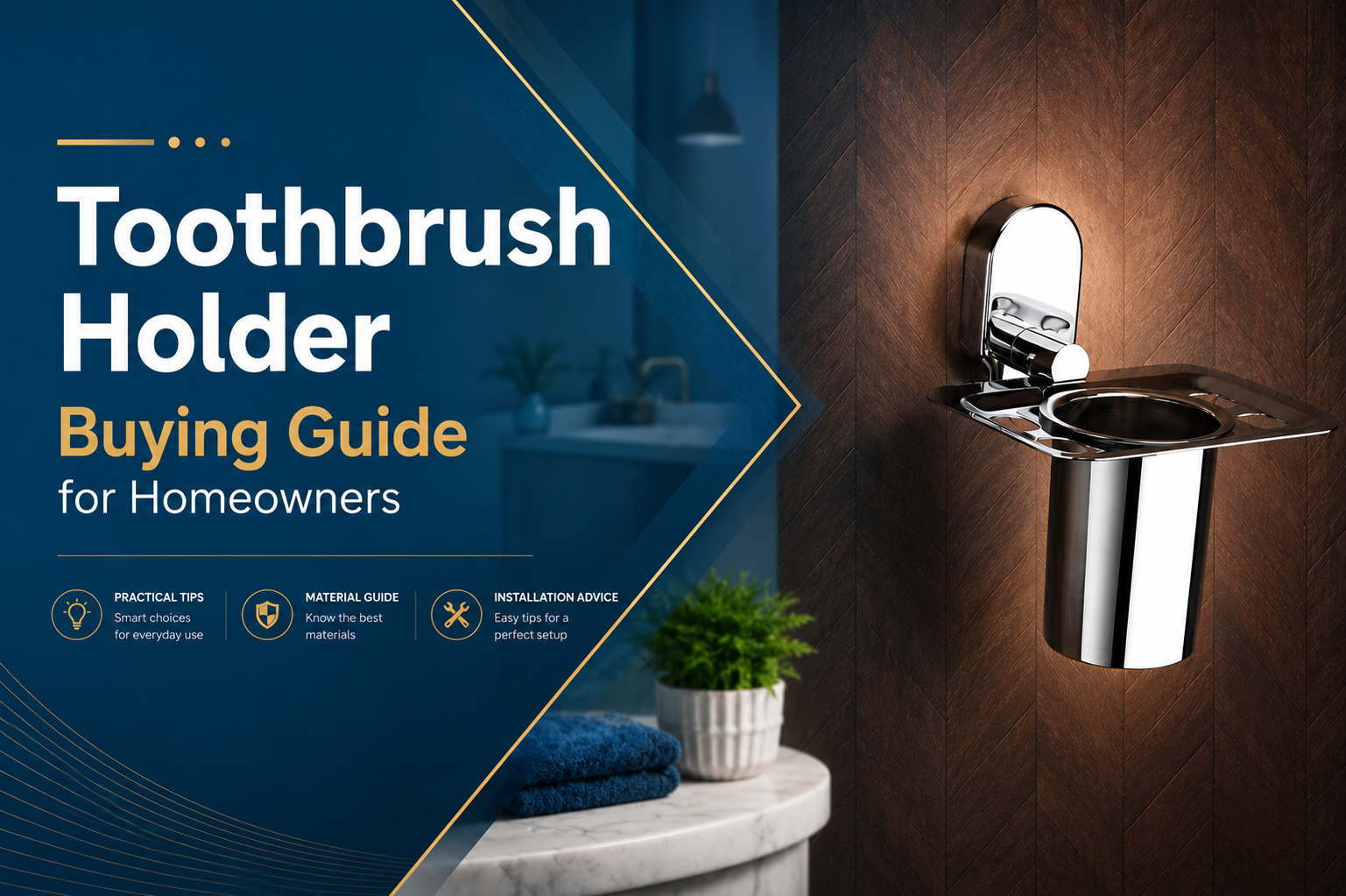
Toothbrush Holder Buying Guide for Homeowners

Nobody really thinks about their toothbrush holder until it starts looking grimy, or the suction cup gives up and falls off the tile for the third time. It costs less than almost anything else in your bathroom, yet you touch it twice a day, every day. That alone makes it worth getting right.

If you’re renovating, fitting out a new bathroom, or just tired of toothbrushes lying flat on the counter, this guide covers what actually matters when picking a toothbrush holder: material, mounting style, finish, and how it fits with the rest of your bathroom accessories.

What Really Matters in a Toothbrush Holder

A good toothbrush holder keeps brushes upright and off wet surfaces, drains water so bristles dry properly, resists rust and corrosion in humid bathrooms, and mounts securely without taking up counter space.

That’s really it. Everything else, finish, design, brand sits on top of these basics. A toothbrush left lying on a wet counter picks up bacteria faster than one stored upright and ventilated. That’s not a marketing claim, it’s just how moisture and airflow work.

Why Does a Wall-Mounted Toothbrush Holder Make More Sense Than a Countertop One?

A wall hanging toothbrush holder frees up counter space, keeps brushes away from sink splashes and tap water, and is easier to clean around. Countertop holders are simpler to install but collect water at the base and take up valuable sink-side space.

Most Indian bathrooms,especially in apartments, don’t have generous counter space to begin with. Once you add a soap dispenser, a tumbler, and daily essentials, a countertop toothbrush stand becomes one more thing competing for room.

This is why wall-mounted designs have become the default choice in modern bathrooms:

  • They sit above splash level, so brushes stay drier
  • They free up the entire counter for actual counter use
  • They’re easier to wipe down since there’s no base collecting water
  • They match better with matching towel rods, soap dishes, and napkin rings mounted at the same height

At Veltrix, every toothbrush holder we manufacture is wall-mounted for exactly these reasons.

How Do You Choose the Right Material for a Bathroom Toothbrush Stand?

Stainless steel and chrome-plated metal hold up best in humid Indian bathrooms. Plastic is cheap but cracks and discolours within a year. Ceramic looks elegant but breaks if dropped. Glass needs frequent cleaning to avoid water spots.

Here’s how each material actually performs over time:

  • Chrome-plated metal: Durable and easy to wipe clean. Resists rust as long as the base metal underneath is good quality. The most practical choice for everyday bathrooms.
  • Stainless steel: Long-lasting, hygienic, doesn’t discolour. The usual choice for hotels and bathrooms that see heavy daily use.
  • Plastic: Cheap upfront, but tends to yellow, crack, or warp once it’s been through enough humidity cycles.
  • Ceramic and glass: Look elegant on a shelf, but they’re a poor match for bathrooms with kids, or anyone moving fast in the morning.

If you want something that still looks new five years from now, metal is the safer bet.

Which Veltrix Toothbrush Holder Suits Your Bathroom Style?

Veltrix makes toothbrush holders across six design series, each in specific finishes. Here’s the full range, so you can match it to what’s already in your bathroom:

SeriesAvailable FinishesBest Suited For
ELITEChromeSimple, classic bathrooms on a budget
RUSTICChromeWarm, textured, traditional interiors
IRISChrome / Gold / Rose GoldPremium bathrooms wanting a luxe finish
FUSIONChrome / Black MattModern homes with bold, dark accents
ARIESChrome / Black MattCompact, contemporary bathrooms
LUIZChrome / Gold / Rose GoldHigh-end, hotel-style bathroom design

A simple way to decide: if your taps, shower set, and towel rod are chrome, stay with chrome. ELITE, RUSTIC, ARIES, and FUSION all offer it. If your fittings lean warmer, with gold or rose gold accents, IRIS and LUIZ are built for that palette. And if your bathroom has dark tiles or a matte black mixer, FUSION or ARIES in Black Matt will tie the look together.

Should a Toothbrush Holder Match Your Other Bathroom Accessories?

Yes. Mixing finishes, like a chrome toothbrush holder next to a gold soap dish, creates visual clutter, especially in small bathrooms. Matching finishes across your toothbrush holder, soap holder, napkin holder, and towel rod gives the whole bathroom a cleaner, more finished look.

This is something homeowners often notice only after the bathroom is fully fitted, when one piece suddenly looks out of place. Veltrix manufactures matching sets, soap holders, napkin holders, towel rods, and toothbrush holders, across the same six series and finishes. That makes it easy to keep everything consistent without sourcing from five different suppliers.

Can a Toothbrush Holder Help With Bathroom Hygiene?

Yes, more than most people realise. A toothbrush left in a closed cup or lying on a wet counter holds onto moisture, and moisture is exactly what bacteria need to grow. A few habits make a real difference:

  • Pick a holder with proper drainage or an open design, not a closed cup
  • Wipe the holder itself clean weekly with mild soap and water
  • Keep it away from directly above the toilet, where flush spray can reach it
  • Replace toothbrushes every three months, regardless of how clean the holder stays

A well-positioned, wall-mounted holder away from the toilet and sink splash zone takes care of most of this on its own.

When Should You Replace a Toothbrush Holder?

A few signs tell you it’s time:

  • The finish is peeling, flaking, or showing rust spots
  • The mounting has loosened and the holder wobbles
  • Water collects inside instead of draining out
  • You’ve renovated and the old holder no longer matches your new fittings

Replacing it isn’t expensive, and a fresh, well-matched holder genuinely changes how finished a bathroom feels.

How Do You Install a Wall-Mounted Toothbrush Holder Properly?

  • Drill into a wall stud, or use anchor plugs rated for the holder’s weight
  • Use stainless steel screws, not the cheap zinc ones that come bundled with budget kits
  • Mount it at a height that’s easy to reach but above the sink’s splash level
  • Run a thin line of waterproof sealant around the base plate so moisture can’t get in behind it

Installation matters as much as the product itself. Even a good holder will work loose over time if it’s mounted into hollow tile without proper anchoring.

What Makes Veltrix a Reliable Toothbrush Holder Manufacturer?

Veltrix is a bathroom accessories manufacturer and supplier based in Rajkot, producing toothbrush holders alongside paper holders, soap dishes, napkin rings, towel rods, and robe hooks, all designed to work together as complete sets.

Every toothbrush holder goes through durability and load testing before it leaves the facility, whether it’s headed to one homeowner’s bathroom or a bulk order for a hotel project. As a bathroom accessories bulk supplier, Veltrix works directly with architects, interior designers, and contractors who need consistent quality across large quantities, not just a handful of pieces.

Picking the Right Toothbrush Holder Doesn’t Have to Be Complicated

A toothbrush holder is small, but it’s one of the few bathroom fittings you touch every morning and every night. Getting the material, mounting, and finish right means you stop thinking about it, which is really the whole point.

Whether you’re drawn to the simplicity of ELITE, the warmth of IRIS in Rose Gold, or the contrast of FUSION in Black Matt, Veltrix‘s toothbrush holder range is built to match the rest of your bathroom without compromise. Browse the full collection, or get in touch with the team in Rajkot for personal or bulk orders.

Frequently Asked Questions

What is the best material for a toothbrush holder in a humid bathroom?

Chrome-plated metal or stainless steel performs best in humid conditions. Both resist rust and hold their finish far longer than plastic or ceramic.

Are wall-mounted toothbrush holders better than countertop stands?

For most bathrooms, yes. Wall-mounted holders save counter space, keep brushes away from sink splashes, and are easier to clean around, especially in compact Indian bathrooms.

Does Veltrix manufacture toothbrush holders in different finishes?

Yes. Veltrix offers toothbrush holders across six series, ELITE, RUSTIC, IRIS, FUSION, ARIES, and LUIZ, in Chrome, Gold, Rose Gold, and Black Matt finishes.

Can I get matching bathroom accessories along with a toothbrush holder?

Yes. Veltrix supplies matching soap holders, napkin holders, towel rods, and robe hooks in the same series and finish, so your full bathroom set looks consistent.

Does Veltrix supply toothbrush holders in bulk for hotels or projects?

Yes. As a bathroom accessories bulk supplier, Veltrix works with architects, contractors, and hospitality projects that need large-quantity orders with consistent finish and quality.

How often should a toothbrush holder be cleaned?

At least once a week, with mild soap and water, to keep bacteria from building up. A holder with good drainage helps too, since it won’t trap standing water.

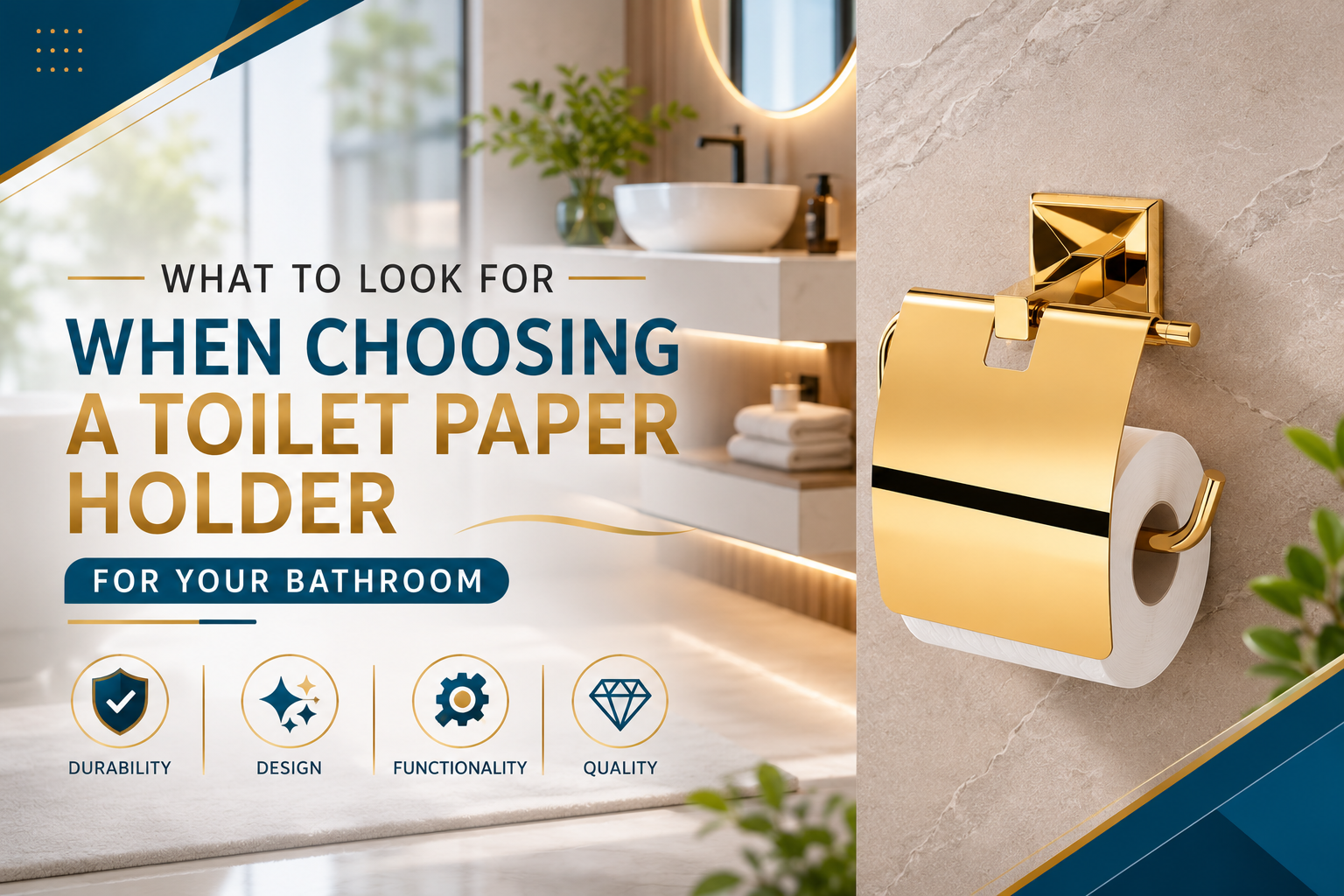
What to Look for When Choosing a Toilet Paper Holder for Your Bathroom

Most people spend more time picking bathroom tiles than they do choosing a paper holder. And then it falls off the wall in three months, or the finish peels, or the roll keeps slipping out. A small decision, maybe — but one you notice every single day.

If you’re renovating a bathroom or simply replacing an old fitting, here’s what actually matters when selecting a toilet paper holder from someone who has worked with bathroom accessories long enough to know what holds up and what doesn’t.

What Types of Paper Holders Are Available Today?

The main types are wall-mounted fixed holders, wall-mounted with covers, free-standing toilet paper holder stands, and recessed in-wall units. Each suits different bathroom sizes, wall types, and usage needs.

At Veltrix, we manufacture and supply all four formats. Wall-mounted options are the most common — they’re space-efficient and work in nearly every bathroom layout. Free-standing toilet paper holder stands are growing in popularity, especially in rentals and homes where drilling into walls isn’t an option. They’re also easy to move during cleaning.

Recessed holders sit flush with the wall for a seamless look. They’re a favourite in high-end bathrooms, though they do require a deeper wall cavity and more precise installation.

Why Does Material Matter More Than You Think?

Material determines how long your paper holder lasts. In Indian bathrooms, especially in humid coastal or monsoon-prone areas, poor-quality metal rusts fast. Stainless steel (Grade 304) is the most reliable choice for longevity and hygiene.

Zinc alloy fittings cost less upfront but often corrode within a year in high-humidity bathrooms. Plastic holders look fine in product photos, but they crack under pressure and can’t handle the weight of double or jumbo rolls.

Our recommendation: go with 304-grade stainless steel, which resists corrosion, holds its finish, and is easy to clean. Many of Veltrix’s modern bathroom accessories — including soap dish and napkin holders — use the same grade for a consistent, durable bathroom set.

How Should You Decide Between Wall-Mount and Freestanding?

Choose wall-mounted if you have permanent walls and want a fixed, space-saving setup. Choose a freestanding toilet paper holder stand if you’re renting, have tiled walls that are hard to drill, or need flexibility to reposition.

A few practical questions to guide you:

  • Do you rent? A free-standing stand is the smarter call — no wall damage, no drilling, no deposit issues.
  • Is your bathroom small? Wall-mounted saves floor space.
  • Do you have young children? A secured wall-mount handles rough use better.
  • Do you want a premium finish look? Recessed or concealed-screw wall mounts look cleaner.

Many customers who contact us as a bathroom accessories supplier ask this question first. The answer almost always comes down to their wall type and whether they’re planning a long-term renovation or a quick upgrade.

Which Finish Works Best in an Indian Bathroom?

Chrome and brushed stainless steel are the most popular finishes for Indian bathrooms. Chrome is affordable and bright; brushed steel hides fingerprints and watermarks better. Both are easy to clean and hold up well against humidity.

Matte black finishes are trending in contemporary bathroom design and pair beautifully with white sanitaryware. Gold and PVD-coated finishes suit premium bathrooms but require more careful cleaning.

At Veltrix, we make toilet roll holder manufacturers across multiple finishes — all electroplated or PVD-coated to maintain colour and resist peeling. Whatever you choose, make sure the finish is applied over a solid stainless steel or brass base, not over zinc or aluminium alloy, which corrodes underneath and causes bubbling.

Which Paper Holder Is Right for Your Bathroom?

Choosing the right paper holder comes down to three things: the design series that fits your bathroom style, the finish that matches your existing fittings, and how much visual drama you want from a small accessory.

Here’s the complete Veltrix paper holder range to help you decide at a glance:

FittingDailyWeeklyMonthlyQuarterly
Stainless Steel Soap HolderDry wipeMild soap + dryBaking soda pasteOil polish
Glass Soap Dish HolderVinegar spray + lint clothAnti-scum cleanHydrophobic coat
Towel Rack / Towel RodWipe & dryInspect brackets + polishCheck wall fixings
Robe HookWipe tip & baseInspect finishClear lacquer if chipping
Paper HolderDisinfect wipeClean spindle
Liquid DispenserWipe exteriorFlush internal pump
Toothbrush HolderRinse insideVinegar soakBottle brush clean
Napkin RingDry wipePolish

When Should You Replace a Toilet Paper Holder?

Most people wait until something breaks. But a few signs tell you it’s time to upgrade sooner:

  • The holder wobbles or has pulled slightly away from the wall
  • The finish is flaking, rusting, or discolouring
  • The spring mechanism no longer holds the roll securely
  • Your bathroom has been renovated and the old holder no longer matches

Replacing before complete failure also avoids wall damage from a falling fitting.

Can You Mix Bathroom Accessory Finishes?

You can, but it needs intention. Mixing chrome fittings with a brushed steel paper holder, for instance, creates visual noise in a small bathroom. The simpler approach: choose one finish and apply it consistently across your paper holder, stainless steel soap holder, napkin holders, towel rings, and robe hooks.

At Veltrix, we supply complete bathroom accessory sets that match across all products — which is why architects and interior designers often prefer working with a single toilet paper holder supplier rather than sourcing from multiple vendors.

How Do You Install a Paper Holder Properly?

Poor installation is the number one reason holders fail. A few principles:

  • Always drill into wall studs or use anchor plugs rated for the load
  • Use stainless steel screws, not the zinc or iron ones that come in some cheap kits
  • Apply waterproof sealant around the wall plate to prevent moisture from entering behind the fitting
  • Tighten screws firmly, but don’t overtighten into tile — tile cracks are irreversible

If you’re using a free-standing toilet paper holder stand, check that the base is heavy and stable. Lightweight plastic bases tip easily, especially in homes with children.

What Makes Veltrix Holders Different?

As toilet roll holder manufacturers based in Rajkot, Gujarat, Veltrix has over a decade of experience producing bathroom fittings for homes, hotels, hospitals, and commercial spaces across India and international markets.

Every product goes through surface treatment quality checks, load tests, and finish durability assessments before it leaves the facility. We don’t just supply — we also help customers select the right configuration for their specific bathroom type, wall material, and usage pattern.

Our range includes wall-mounted holders, free-standing stands, double-roll holders, concealed-screw designs, and full bathroom accessory sets that include napkin holders, stainless steel soap holders, towel bars, and more — all in matching finishes.

Conclusion: A Paper Holder Is Worth Getting Right

A paper holder might seem like the last thing on your bathroom checklist, but it’s one of the fittings you interact with multiple times every day. Choosing the right paper holder — one with the right material, mount type, and finish — means you won’t be thinking about it again for years.

If you’re looking for a reliable paper holder supplier or want to explore our complete modern bathroom accessories range, Veltrix is happy to help. Whether you need one piece or a full project supply, reach out to our team in Rajkot.

FAQs

Q1: What is the best material for a toilet paper holder in humid bathrooms?

304-grade stainless steel is the best choice. It resists corrosion in high-humidity environments, doesn’t rust, and maintains its finish longer than zinc alloy or plastic alternatives.

Q2: Can I buy a matching set of bathroom accessories from one supplier?

Yes. Veltrix supplies complete bathroom accessory sets including paper holders, napkin holders, stainless steel soap holders, towel rings, and robe hooks in matching finishes — ideal for consistent bathroom design.

Q3: How long does a good quality paper holder last?

A stainless steel paper holder from a reputable manufacturer, properly installed, should last 10–15 years or more without any finish deterioration or mechanical failure.

Q4: What is the difference between chrome and brushed steel finish?

Chrome is bright, reflective, and affordable. Brushed steel has a softer, matte-satin look and hides fingerprints and watermarks better. Both are durable and suit modern bathrooms.

Q5: Do you supply toilet paper holders for commercial or hotel projects?

Yes. Veltrix supplies bathroom accessories for hotels, hospitals, offices, and large residential projects. Bulk pricing and custom finish options are available — contact our sales team for project inquiries.

How to Maintain and Care for Your Bathroom Fittings for Lasting Shine

Your bathroom says a lot about your home. It’s the first space you walk into every morning and the last one you visit before bed. And yet, it’s also the most neglected when it comes to upkeep — especially the fittings.

A well-chosen set of bathroom accessories can transform an ordinary bathroom into something that feels genuinely refined. But even the best fittings from the most trusted bathroom fitting suppliers will lose their appeal if you don’t care for them properly.

The good news? Maintaining your bathroom fittings is neither expensive nor time-consuming. With the right knowledge and a simple routine, you can keep your soap dishes, towel racks, toothbrush holders, and robe hooks looking brand new for years — even decades.

This guide covers everything: what each type of fitting needs, why damage happens faster than most people expect, how to clean and protect specific accessories step by step, and when to increase your care schedule based on your bathroom conditions.

What Are Bathroom Fittings and Why Does Their Care Matter?

Bathroom fittings — also called bathroom accessories or bathroom hardware — are the functional and decorative elements that complete a bathroom’s design. This includes your soap dish, toothbrush holder, towel rack, towel rod, paper holder, robe hook, liquid dispenser, napkin ring, and glass accessories.

These items do real daily work. They hold wet items, sit in steamy environments, and get touched with soapy hands dozens of times a day. Without proper care, even high-quality accessories sourced from a reputable bath fitting manufacturer begin to corrode, stain, or lose their finish.

But here is what most homeowners miss: the finish on your fittings is doing most of the work. Whether it’s a chrome plating, a brushed stainless steel surface, a glass coating, or a painted finish — that outer layer is what gives fittings their shine, their corrosion resistance, and their premium look. Once that layer is compromised, the damage accelerates quickly.

Caring for your fittings, then, is really about protecting that finish. Everything else follows from that understanding.

Understanding the Most Common Bathroom Fitting Materials

Before you can care for your accessories properly, you need to know what they are made of. Different materials respond very differently to moisture, cleaning agents, and daily wear.

Stainless Steel

Stainless steel is the most widely used material in modern bathroom accessories, and for good reason. It resists rust, handles humidity well, and has a clean, contemporary look that suits most bathroom styles. Products like a stainless steel soap holder or a stainless steel towel rack are among the most popular choices for both homes and hotels.

The key thing to understand about stainless steel is that it’s not maintenance-free — it’s maintenance-forgiving. It can handle neglect for longer than most materials, but hard water deposits and soap scum still build up and will eventually dull the surface if not cleaned regularly.

Glass

Glass accessories — like a glass soap dish holder or a glass toothbrush holder — bring elegance and visual lightness to a bathroom. They pair beautifully with chrome or brushed metal hardware and are increasingly popular in modern bathroom decor.

Glass, however, is highly susceptible to hard water staining and soap scum. These deposits don’t just look bad — over time they can etch the surface and create permanent haziness. Glass fittings need more frequent attention than steel ones.

Chrome-Finished Accessories

Chrome is a plating applied over brass or zinc alloy. It’s that highly reflective, mirror-like finish you see on many classic bathroom accessories. Chrome looks stunning when clean, but it’s one of the more delicate finishes to maintain.

The chrome layer is thin. Harsh cleaners, abrasive cloths, or even leaving water to air-dry on the surface can cause it to pit, tarnish, or peel. Chrome accessories need gentle, consistent care.

How to Clean and Maintain Each Type of Bathroom Fitting

Now for the practical part. Here’s a fitting-by-fitting breakdown of what actually works — routines used by facility managers in hotels and service apartments who keep hundreds of bathroom fittings looking pristine every single day.

Stainless Steel Soap Holders and Accessories

Stainless steel is forgiving but not invincible. The goal with stainless steel care is to preserve the grain finish and prevent mineral buildup from bonding to the surface.

Daily habit (30 seconds): After your morning routine, give your stainless steel soap holder a quick wipe with a dry cloth or tissue. This takes less than half a minute and prevents 80% of soap and water buildup from forming in the first place.

Weekly clean: Dampen a soft microfibre cloth with warm water and add one small drop of mild dish soap. Wipe the fitting in the direction of the grain — stainless steel has a directional brush pattern, and wiping with the grain prevents visible scratches. Rinse with clean water and dry immediately with a separate cloth.

Never leave stainless steel wet. Air-drying is one of the biggest causes of mineral spots.

Monthly deep clean: For stubborn water spots or soap residue, make a paste using baking soda and a few drops of water. Apply it gently with a soft cloth, leave it for three to four minutes, then wipe in the direction of the grain and rinse thoroughly. Dry completely.

Quarterly polish: Apply a very small amount of mineral oil or food-grade baby oil with a clean cloth. Buff it in gently, then wipe off the excess. This creates a thin protective layer on the steel surface that repels water and restores the original shine. The difference is immediately visible.

Products to avoid absolutely: Bleach, chlorine-based cleaners, steel wool pads, scouring powders, and anything containing hydrochloric acid. These products strip the passive oxide layer that gives stainless steel its corrosion resistance — and that damage is irreversible.

Glass Soap Dish Holders and Glass Accessories

Glass accessories have a high visual impact, but they require consistent attention to stay that way. The main enemies of glass bathroom fittings are hard water minerals and soap scum — and both accumulate faster than you’d expect.

Weekly clean: Mix equal parts white vinegar and water in a small spray bottle. Spray the glass soap dish holder generously and let it sit for two minutes before wiping with a lint-free microfibre cloth. This dissolves fresh mineral deposits without scratching the glass.

For the metal holder or bracket that holds the glass, use a separate damp cloth with mild soap, then dry. Don’t let vinegar contact chrome or brass parts — vinegar is safe on glass but can dull metal finishes with repeated exposure.

For heavy soap scum buildup: Apply a thin layer of baking soda paste (baking soda plus a few drops of water) directly onto the scum-affected areas. Leave it for five minutes. Then wipe gently with a soft cloth — not a scrubbing pad — and rinse. Repeat once if needed.

The professional’s trick: After cleaning your glass accessories to a pristine state, apply a thin layer of car-windshield rain repellent product to the glass surface. It sounds unconventional, but the hydrophobic coating causes water droplets to bead and run off instead of sitting and evaporating. The result is dramatically less mineral buildup between cleans. Reapply once every two to three months.

What to avoid: Rough cloths, scrubbing sponges, and abrasive powders. Even “non-scratch” scrubbing products leave micro-abrasions on glass that create permanent dullness over time.

The Maintenance Schedule You Can Actually Stick To

FittingDailyWeeklyMonthlyQuarterly
Stainless Steel Soap HolderDry wipeMild soap + dryBaking soda pasteOil polish
Glass Soap Dish HolderVinegar spray + lint clothAnti-scum cleanHydrophobic coat
Towel Rack / Towel RodWipe & dryInspect brackets + polishCheck wall fixings
Robe HookWipe tip & baseInspect finishClear lacquer if chipping
Paper HolderDisinfect wipeClean spindle
Liquid DispenserWipe exteriorFlush internal pump
Toothbrush HolderRinse insideVinegar soakBottle brush clean
Napkin RingDry wipePolish

How to Choose Long-Lasting Bathroom Fittings from the Start

Maintenance is far easier when your fittings are made from the right materials in the first place. Here’s what to look for when purchasing from bathroom fitting suppliers.

For stainless steel items: Ask whether the product uses 304-grade or 316-grade stainless steel. Grade 316 contains molybdenum, which provides superior resistance to chloride corrosion — important in humid, coastal, or highly chlorinated water environments.

For chrome-finish accessories: Ask about the plating thickness. Quality chrome plating should be at least 0.25 microns on top of a nickel undercoat. Thinner plating corrodes significantly faster.

For glass accessories: Tempered glass is far stronger and safer than standard glass. All glass bathroom accessories should be tempered — if the product description doesn’t mention it, ask before purchasing.

For all bathroom accessories: Reputable bathroom decor accessories suppliers will provide product specifications, material grades, and finish details. If a supplier can’t tell you what their fittings are made of, that’s a red flag.

Veltrix, based in Rajkot with over 21 years of manufacturing experience, produces bathroom accessories across all major categories — from glass soap dish holders and double soap dishes to towel racks, robe hooks, paper holders, napkin rings, and liquid dispensers. Their fittings are designed to meet the specific demands of Indian bathroom environments, including hard water areas and high-humidity conditions.

Common Mistakes That Damage Bathroom Fittings Prematurely

  • Using bleach on metal fittings. Bleach is extremely corrosive to most metal finishes. Many people reach for bleach when they see staining or discolouration, but on chrome, stainless steel, or brass, it accelerates the exact damage they’re trying to fix.
  • Leaving fittings wet after cleaning. Rinsing without drying immediately defeats the purpose of cleaning. The clean water still contains dissolved minerals that will re-deposit as it evaporates.
  • Using the wrong cloth. Paper towels leave fibres and are mildly abrasive. Coloured cloths can transfer dye. Sponge scrubbers scratch. The right choice is always a white, soft microfibre cloth — they lift grime without abrading the surface.
  • Ignoring mounting points. The fitting itself may look perfect while the bracket holding it to the wall is silently corroding. Once a bracket fails, it often takes the wall surface with it. Checking brackets takes thirty seconds a month.
  • Over-tightening during installation. When fittings are first installed, over-tightened screws can crack wall plugs or strip threads. A loose screw that becomes tighter over time is also a sign of wall movement — worth monitoring.
  • Mixing cleaning products. Never apply two different cleaning products simultaneously or in quick succession without rinsing thoroughly. Some combinations — bleach and acid-based cleaners, for example — produce harmful fumes and chemically attack surfaces.

Final Takeaway: Make Shine a System, Not an Effort

The bathrooms that look consistently beautiful aren’t the ones with the most expensive fittings. They’re the ones where someone has built a simple, sustainable care routine and stuck to it.

You don’t need specialist products or hours of effort. You need a microfibre cloth, mild dish soap, a spray bottle with diluted vinegar, and a habit of wiping things dry after use. That’s genuinely the foundation of 90% of excellent bathroom fitting care.

Start with what you have. Pick one fitting that’s been neglected — your glass soap dish holder, your stainless steel soap holder, or your towel rack — and spend five minutes on it today. Notice the difference. Then build from there.

And when the time comes to add new accessories or replace used ones, choose from bathroom fitting suppliers who are transparent about their materials, experienced in manufacturing, and committed to quality. That investment, combined with the care you now know how to provide, is what produces a bathroom that truly lasts.

Frequently Asked Questions

Q1. How often should I clean my bathroom fittings?

For most bathrooms, a daily dry wipe and a proper weekly clean is sufficient. If your area has hard water or your bathroom has poor ventilation, increase to every three to four days for glass accessories and stainless steel surfaces. Monthly deep cleans and quarterly polishing apply to all fitting types.

Q2. Can I use vinegar on all bathroom fittings?

White vinegar diluted with equal parts water is safe on glass and stainless steel surfaces. However, avoid using it on chrome-plated or brass-finished fittings, as repeated exposure can dull and corrode those finishes. Always use a separate cloth with mild soap for metal brackets when cleaning a glass soap dish holder.

Q3. Why does my stainless steel soap holder get white spots even after cleaning?

White spots are mineral deposits left by hard water as it evaporates. The fix is simple: always dry your stainless steel soap holder immediately after cleaning or after water contact. For existing spots, use a baking soda paste, wipe along the grain, and finish with a light coat of mineral oil to create a protective barrier.

Q4. What’s the safest cleaner to use on chrome bathroom accessories?

Mild dish soap diluted in warm water works for regular cleaning. For light tarnish, non-gel, non-whitening toothpaste applied with a soft cloth and rinsed off works well. Never use bleach, scouring powder, or acidic cleaners on chrome — they strip the plating permanently.

Q5. How do I stop my glass soap dish holder from getting hazy so quickly?

Two things help significantly. First, clean it weekly with a vinegar-water solution to dissolve mineral deposits before they bond. Second, after cleaning, apply a thin coat of car windshield rain repellent to the glass surface. This creates a hydrophobic barrier that repels water and dramatically slows the rate of mineral buildup. Reapply every two to three months.

Q6. When should I replace bathroom fittings instead of trying to maintain them?

Replace fittings when rust has penetrated below the surface finish, when chrome is visibly bubbling or peeling in layers, when glass accessories have structural chips near mounting holes, or when mounting brackets are loose and cannot be re-tightened. Surface staining and minor tarnish are always fixable — structural compromise and deep corrosion are not.

WhatsApp Us Get Quote