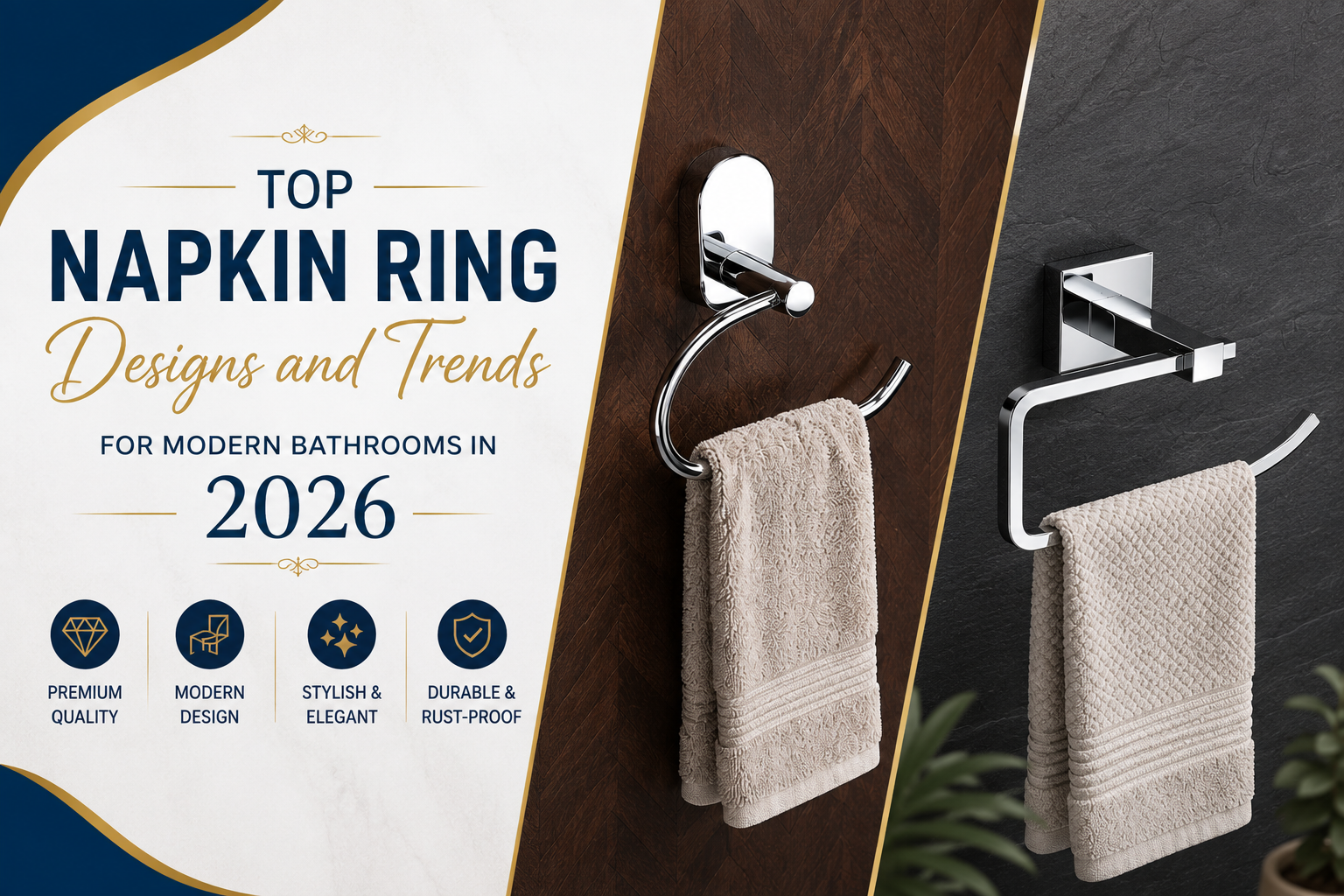
Top Napkin Ring Designs and Trends for Modern Bathrooms in 2026

A dealer asked us last month why a customer kept calling it a “napkin ring” when she clearly meant the little loop near her basin for hanging a hand towel. Fair confusion, honestly. That’s the actual trade term in a lot of Indian bathroom fittings catalogues, but most people picture the metal rings that hold cloth napkins at a dinner table when they hear it. Different fixture entirely. In a bathroom, it’s a small wall-mounted piece meant to hold a folded hand towel within reach of the sink, nothing to do with the dining table version.

If you’re shopping for that specific fixture and trying to work out what finish and size actually suits your bathroom this year, here’s what’s worth knowing.

What Is a Bathroom Napkin Ring, Exactly?

Basically a small loop, usually somewhere between 4 and 6 inches across, mounted near the basin to hold one folded hand towel. Smaller than a full towel bar, and it’s not meant for a bath towel, so it fits well in powder rooms, guest bathrooms, or anywhere the counter’s already tight on space.

Why Napkin Rings Are Showing Up More in Bathroom Decor Accessories

Bathrooms have gotten fussier about detail over the last few years, not just the tiles and taps but the smaller bathroom decor accessories that used to get ignored entirely. A napkin ring fills a real gap, hand towels need somewhere to hang that isn’t a full-size bar meant for something much bigger.

There’s a hygiene side to it too, which people don’t always think about upfront. A hand towel on its own ring dries faster and stays separate from the bath towel, and that actually matters more in a shared or guest bathroom than it sounds like it should.

Which Napkin Ring Designs Are Actually Trending This Year?

A handful of patterns keep turning up across newer bathroom projects. Slim, minimal hoops in matte black or brushed steel, matching the broader move toward quieter, less flashy hardware. Gold and rose gold finishes too, mostly in powder rooms and guest bathrooms where a bit of warmth doesn’t feel out of place. Double-ring designs are catching on as well, holding two hand towels side by side, which helps in busier shared bathrooms. And plain circular rings are slowly giving way to slightly angular, geometric shapes.

Design TrendFinish OptionsBest Suited For
Slim minimal hoopMatte black, brushed steelModern, minimalist bathrooms
Gold or rose gold ringGold, rose goldPowder rooms, guest bathrooms
Double-ring holderChrome, matte black, goldShared family bathrooms
Geometric ringMatte black, brushed steelContemporary, design-led interiors

How Do You Actually Pick the Right One for Your Bathroom?

Match the finish to whatever’s already on the taps and towel bar, that’s step one. A mismatched ring stands out a lot more than you’d expect once it’s actually up on the wall. After that, think about size against the space you’ve got, a bulky double-ring holder looks wrong crammed into a genuinely small powder room.

Material matters more than people assume too. A stainless steel napkin ring, SS304 grade especially, holds up fine against daily humidity and won’t go dull or spotty the way a cheap plated version tends to within a year.

When Does Gold Actually Make Sense Over Steel?

Powder rooms, guest bathrooms, anywhere the whole space leans a bit warmer and more formal, darker tile, wood vanity, warmer lighting, that kind of setup. Gold napkin rings manufacturers usually offer both a bright gold and a brushed or antique finish, and the brushed one tends to age better with daily handling, less obvious wear over time compared to a high-shine finish.

Steel’s the better call in a bathroom that gets hammered daily by a family. It just takes wear better and doesn’t need the gentler handling a plated gold finish sometimes wants.

Can Napkin Ring Manufacturers Actually Match a Full Bathroom Set?

Yes, and it’s worth checking before buying a napkin ring on its own, actually. Decent napkin ring manufacturers, us at Veltrix included, build these across the same finish ranges used on towel bars, soap dishes, dispensers, so it doesn’t end up being the one odd piece out in an otherwise matched bathroom.

We make napkin rings in stainless steel and gold-finished variants out of our Rajkot facility, right alongside the rest of the accessory range, so a full set can come from one order instead of a separate hunt for what’s honestly the smallest fixture in the whole bathroom.

Find Stylish Bathroom Napkin Rings

Explore stylish stainless steel and gold-finished napkin rings from Veltrix, designed to complement your bathroom fittings and interior style.

Explore Napkin Rings →

Should You Go Through a Napkin Ring Supplier Directly, or Just a Retailer?

Go direct if you’re fitting out more than a bathroom or two, or if matching finish across the set genuinely matters to you. A manufacturer or supplier can usually tell you the exact plating thickness and base material, which a retailer selling whatever’s on the shelf that week often just can’t.

For a single quick replacement though, retail’s fine. Speed matters more than precision matching in that situation.

Conclusion

Small fixture, sure, but napkin rings are one of the easier ways to finish off a bathroom’s look without touching anything major. Minimal steel hoop or warmer gold finish, it really just comes down to the rest of your bathroom’s palette and how much daily handling the piece needs to survive.

Veltrix manufactures napkin rings and the wider range of bathroom decor accessories out of Rajkot, working with dealers, designers, and homeowners across India. Whether it’s one stainless steel napkin ring for a guest bathroom or you’re going through a napkin ring supplier for something bigger, pick a finish that actually continues from the rest of your fittings. Don’t treat it as an afterthought, it shows.

Frequently Asked Question

Q1: What’s the difference between a napkin ring and a towel ring in a bathroom?

Napkin ring’s smaller, built for one folded hand towel. Towel ring’s bigger, meant for a full bath towel. Both mount on the wall, just different scales entirely.

Q2: Does a gold napkin ring tarnish over time?

Not much, if it’s a genuine gold-plated finish on a decent base metal. Wipe it dry after use instead of leaving it wet though, that alone extends the finish’s life quite a bit.

Q3: Is stainless steel or brass better for a bathroom napkin ring?

Steel, generally, SS304 grade especially. It handles daily humidity with less fuss than brass, which needs regular polishing or it starts developing a patina.

Q4: Can I get a napkin ring that matches my existing towel bar and soap dish?

Usually, yes. Most manufacturers with a full accessory range offer napkin rings in the same finishes as their towel bars and soap dishes. Just ask specifically for a matching set, don’t assume it’s automatic.

Q5: What size napkin ring works best for a small powder room?

Somewhere around 4 to 5 inches usually works well. Go bigger than that in a small space and it starts looking bulky fast.
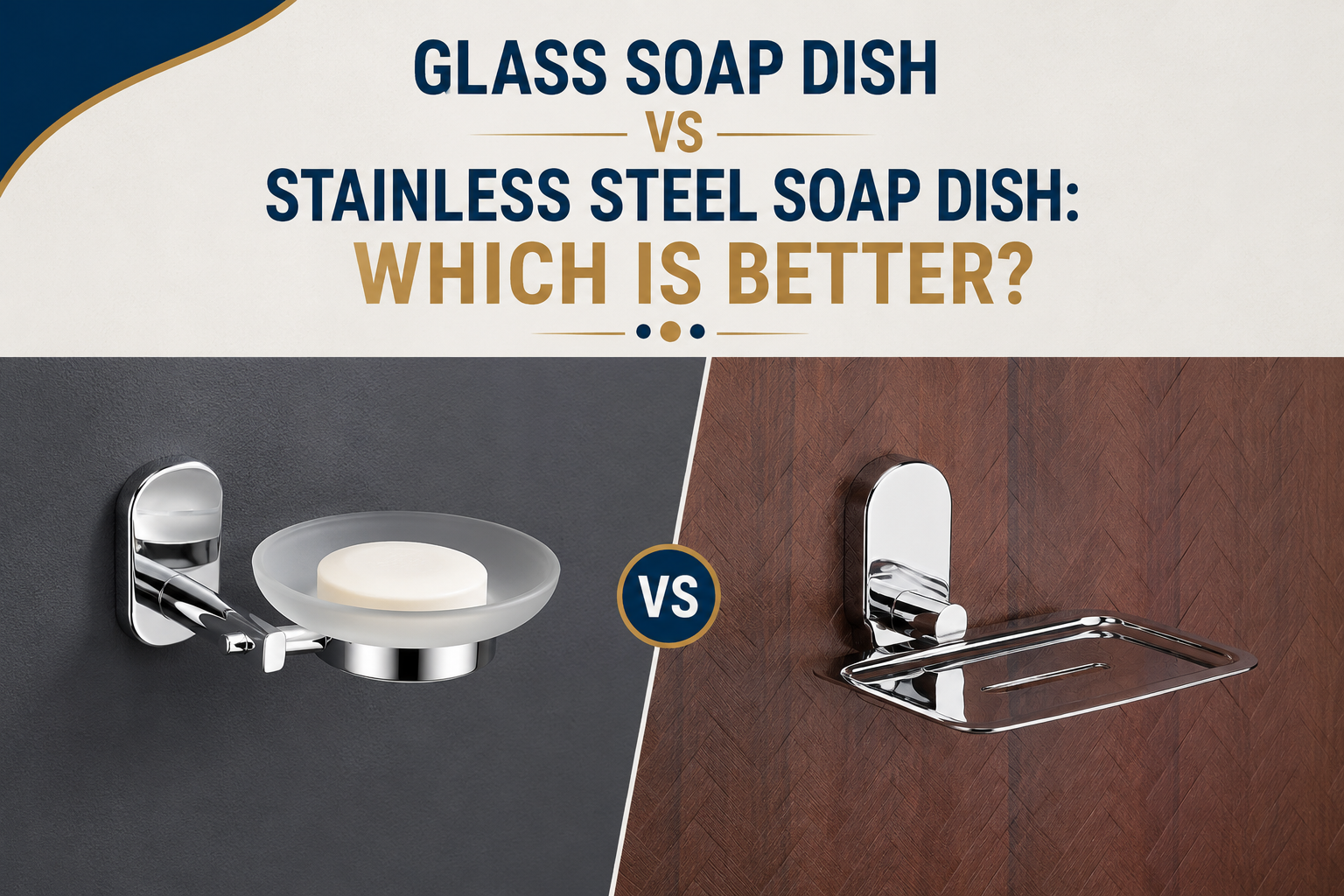
Glass Soap Dish vs Stainless Steel Soap Dish: Which Is Better?

Most people don’t really choose a soap dish. They just grab whatever’s paired with the rest of the bathroom set and move on. Fine, until six months later the glass one’s got a chip from a dropped shampoo bottle, or the steel one’s gone dull because nobody wiped it down as often as they should’ve. By then it’s a bit late to ask which material actually suited the way the bathroom gets used.

So, glass or steel. Here’s what actually separates them, not just which one photographs better.

What’s the Real Difference Between a Glass Soap Dish and a Stainless Steel Soap Dish?

Glass drains well, stays cool to the touch, and you can see straight through it, so grime shows up fast and gets wiped off before it builds up. Steel, SS304 grade especially, shrugs off knocks that would chip glass and doesn’t rust even when the bathroom stays humid for weeks at a stretch. What it doesn’t do is show dirt the same way, so it needs a bit more deliberate cleaning rather than the “oh, I can see it needs a wipe” nudge glass gives you.

FeatureGlass Soap DishStainless Steel Soap Dish
DrainageGood, especially slotted designsGood, particularly mesh or perforated trays
Impact resistanceLower, can chip if droppedHigh, dents rather than shatters
Visibility of dirtHigh, residue is obviousLower, needs regular wiping
WeightLighterHeavier, feels sturdier
Best finish matchChrome, matte black fixturesAny steel-based bathroom set
Typical lifespan6–8 years with care8–10 years or more

Why Bother With a Soap Dish at All Instead of Just Leaving the Bar on the Counter

Because a bar left directly on tile or granite turns into a sticky mess almost every time, and it stays wet longer without proper drainage, which eats into how long it actually lasts. A dish, either material, keeps the counter cleaner and the soap itself drier between uses. Slotted or raised designs do this best.

There’s a look-of-the-thing angle too. A matching dish ties into the rest of the fittings instead of leaving a bar of soap sitting there like nobody planned for it.

Which One Actually Works Better in a Small Bathroom?

Glass, most of the time. It doesn’t add visual bulk the way solid materials do, so a tight counter feels a bit less crowded with one sitting on it.

Steel earns its keep once the bathroom sees real daily traffic, more than one or two people rushing through mornings, since it just takes knocks better than glass does. Nobody’s gentle with a glass soap dish at 7am on a weekday.

How Do You Actually Choose Between the Two for Your Bathroom’s Style?

A few things worth weighing before you decide:

  • Chrome or matte black taps and towel bars already in place? Glass tends to sit alongside metal fittings without competing with them.
  • Rest of the bathroom already steel? Match it, keep the set visually consistent.
  • Kids running around? Steel, honestly, just for the shatter-resistance alone.
  • Hate wiping soap scum daily? Glass, since you’ll actually notice when it needs it, which sounds minor but genuinely changes how often it gets cleaned.

When Does a Stainless Steel Soap Dish Actually Win Over Glass?

When durability matters more than how light the piece looks. Shared family bathrooms, rentals where you’d rather not deal with breakage, gyms and hotels where nobody’s handling the fittings gently. Steel also just forgives you if you’re not the type to wipe residue off every single day, which, let’s be honest, most people aren’t.

Still Deciding Between Glass and Stainless Steel?

Explore Veltrix’s glass and SS 304 soap dishes, combining durability, practical design, and modern bathroom aesthetics.

Explore Soap Dish →

Can Stainless Steel Soap Dish Manufacturers Actually Match Glass on Looks?

Yeah, and that’s changed quite a bit in the last few years. Decent stainless steel soap dish manufacturers now do brushed, matte black, rose gold finishes that look genuinely considered rather than purely functional. The trick isn’t picking the fanciest finish though, it’s picking one that actually continues from your existing taps and towel bar instead of treating the soap dish like its own separate decision.

We build both glass and steel soap dishes out of the same facility here at Veltrix, in Rajkot, so whichever you land on, it can still match the rest of the bathroom without you hunting across three different suppliers to pull it off.

Should You Buy Bathroom Accessories Wholesale for a Bigger Project?

If you’re fitting out more than a handful of bathrooms, a hotel wing, a residential block, a rental portfolio, buying wholesale bathroom accessories straight from a manufacturer usually beats sourcing piece by piece at retail, both on price and on keeping the finish consistent across dozens of identical units. That consistency is genuinely hard to pull off any other way once you’re past ten or fifteen bathrooms.

For just the one bathroom at home, though, don’t bother. Retail or a small direct order is plenty, the volume doesn’t justify going wholesale.

Conclusion

Glass or steel really just depends on how the bathroom actually gets used, who’s using it, and how much visual weight you want sitting on the counter. Neither one’s objectively better than the other. They’re built for slightly different daily realities, and picking based on your actual bathroom beats picking based on whichever one looked nicer under showroom lighting.

Veltrix manufactures both soap dishes, along with a matching accessory range, from our facility in Rajkot. Need one glass soap dish for a guest bathroom, or wholesale bathroom accessories for something much bigger? Pick the material that fits how the bathroom’s actually used. That matters more than the finish.

Frequently Asked Question

Q1: Does a glass soap dish break easily?

Only really if it’s dropped hard on tile, and tempered glass resists chipping a lot better than the standard stuff. Normal daily use isn’t usually a problem.

Q2: Is a stainless steel soap dish rust-proof?

SS304 grade holds up well even in humid bathrooms. Cheaper grades, SS202 or plated steel, start spotting sooner.

Q3: Which is easier to clean, glass or steel?

Glass, mostly, since you can actually see the residue and wipe it before it sits too long. Steel hides dirt a bit more but doesn’t stain the way glass sometimes does with hard water.

Q4: Can I get matching glass and steel accessories from one manufacturer?

Yes, most decent manufacturers, us included, make both across the same finish options, so a full set can come from one order instead of several.

Q5: Is buying wholesale actually cheaper for multiple bathrooms?

Usually, yes. Direct from a manufacturer costs less per unit than retail and keeps the finish consistent across a large order, which retail sourcing rarely manages.

Bathroom Accessories Buying Guide Gujarat: A Complete 2026 Guide

We had a contractor call us in the middle of a project last monsoon, asking if we could rush a replacement soap dish set for a client in Surat. The original set, bought from a local retailer six weeks earlier, had already started rusting at the joints. Surat’s water isn’t particularly harsh, so it wasn’t really a water problem. It was a material problem. Someone had sold cheap plated steel as stainless and nobody caught it until the rust showed up.

That’s basically why this bathroom accessories buying guide Gujarat homeowners keep asking us for exists. Not because buying a soap dish or towel bar should be complicated, but because most of the mistakes people make are avoidable if they know what to check first.

What Should You Check Before Buying Bathroom Accessories in Gujarat?

Check the material grade, not just the finish. SS304 stainless steel and toughened glass hold up well against Gujarat’s varying water hardness, from the harder water in Rajkot and Ahmedabad to the comparatively softer supply in parts of Surat. Ask for this in writing if you’re placing a bulk order, since a verbal assurance means nothing once the fitting’s already installed.

A few other things worth checking on the spot:

  • Weight. Genuine steel and brass feel heavier than plated alternatives of the same size.
  • Finish consistency across pieces, especially if you’re buying a full set.
  • Whether the seller can name the exact grade, not just say “premium steel.”

Why Does Buying Bathroom Accessories in Gujarat Come With Its Own Considerations?

Gujarat’s water hardness varies more than people expect between cities, and that directly affects how fast cheap fittings show wear. A fitting that lasts eight years in Rajkot might start spotting within two years somewhere with harder water, if the material grade wasn’t right to begin with. Buying bathroom accessories Gujarat residents can actually trust means accounting for this rather than assuming one product suits every home in the state.

There’s also the advantage of proximity. Gujarat, and Rajkot specifically, has decades of stainless steel and brass hardware manufacturing behind it. That means shorter supply chains, easier factory access if you want to inspect a bulk order, and manufacturers who understand local conditions rather than working off a generic national spec sheet.

Here’s a quick reference for what tends to matter most depending on where in Gujarat you’re buying for:

RegionTypical Water HardnessMaterial to PrioritiseNotes
RajkotModerate to highSS304 stainless steelLocal manufacturing hub, easiest factory access
AhmedabadHighSS304 stainless steel, toughened glassFast-growing demand, verify grade on bulk orders
SuratModerateSS304 stainless steelHumidity from coastal proximity adds to wear
VadodaraModerateSS304 stainless steel, brass for fixturesMix of traditional and modern bathroom styles
Coastal Saurashtra townsHigh, salt-influenced airSS304 stainless steel onlyAvoid brass and chrome-plated fittings near coast

Which Bathroom Accessories Are Worth Spending More On?

Not everything needs the premium version. Where it actually matters:

  • Towel bars and racks, since they carry repeated weight from wet towels and the mounting hardware needs to hold up under real stress, not just look good on day one
  • Soap dishes, particularly double soap dish sets, since they sit in near-constant water contact and are usually the first fitting to show a bad material choice
  • Anything wall-mounted near the shower, where humidity exposure is highest in the whole bathroom

Robe hooks and paper holders see less direct water contact, so the material choice matters a bit less there. You can save on those without much risk.

How Do You Find a Reliable Bathroom Accessories Supplier in Gujarat?

Start by asking for a material test certificate on any bulk order. A genuine bathroom accessories supplier will have this readily available, since it’s just standard documentation for anyone actually manufacturing to spec.

Second, ask whether they manufacture in-house or resell. This matters more than people think. A supplier reselling stock from three different factories can rarely guarantee the same finish across a large order, which shows up fast in a hotel project or an apartment complex with dozens of identical bathrooms.

Third, visit if you can. Rajkot and Ahmedabad both have active manufacturing hubs, and seeing the actual production line tells you more in twenty minutes than a product catalogue tells you in an hour.

Looking for Premium Bathroom Accessories?

Explore Veltrix’s premium SS 304 bathroom accessories, designed for durability, modern aesthetics, and reliable everyday performance.

Get a Bulk Quote →

When Should You Buy From Bathroom Accessories Manufacturers in Gujarat Instead of a Retailer?

Go direct to bathroom accessories manufacturers in Gujarat once you’re placing an order of any real size, ten bathrooms or more, or when you need custom finishes that a retailer’s fixed stock won’t cover. Manufacturers can also usually replace a single damaged piece without forcing you to reorder the whole set, which retailers often can’t do once a batch is sold out.

A retailer still makes sense for a single bathroom or a quick replacement, where speed matters more than customisation or bulk pricing.

Can You Get Modern Bathroom Accessories at Gujarat Prices Without Cutting Quality?

Yes, and this is one of the genuine advantages of buying local. Modern bathroom accessories built from SS304 steel and tempered glass cost noticeably less when sourced from a Gujarat manufacturer than an imported equivalent of the same spec, mostly because there’s no import duty, no long shipping chain, and no middleman markup stacked on top.

The catch is that “cheap” and “local” aren’t automatically the same thing. A supplier quoting well below the going rate for genuine SS304 fittings is usually cutting the steel grade somewhere, even in Gujarat’s competitive local market.

Should You Choose Double Soap Dish Manufacturers Over Single-Dish Sellers?

For most family bathrooms, yes. Double soap dish manufacturers design their sets to hold a hand soap bar and a body soap separately, which keeps both drier and reduces the mushy, half-dissolved soap problem that happens when everything’s crammed into one small dish.

It also tends to be a better value long-term, since you’re buying one properly designed fitting instead of two mismatched single dishes bought at different times from different sellers.

Conclusion

Getting bathroom accessories right in Gujarat really comes down to matching material to the local water conditions and buying from someone who can actually confirm what you’re getting, in writing, before the order ships. This bathroom accessories buying guide Gujarat readers can keep coming back to boils down to a few habits: check the grade, ask for certification on bulk orders, and buy local where it makes sense.

Veltrix manufactures bathroom accessories in Rajkot, working as a trusted bathroom accessories supplier for homeowners, architects, and contractors across Gujarat and beyond. Whether you need a single double soap dish or a full bulk order for a project, we can confirm the exact material grade before you commit to anything.

Frequently Asked Question

Q1: What material lasts longest for bathroom accessories in Gujarat’s water conditions?


SS304 stainless steel and toughened glass hold up best, resisting rust and staining regardless of whether the local water hardness is on the higher or lower end.

Q2: Is it cheaper to buy bathroom accessories locally in Gujarat than to import?


Usually yes. Local manufacturers skip import duty and long shipping chains, so genuine SS304 and glass fittings often cost less than an imported equivalent of the same grade.

Q3: How can I verify a Gujarat supplier is using genuine stainless steel?


Ask for a material test certificate confirming SS304 grade, and compare the weight of the fitting against a known genuine piece. Lighter usually means a cheaper grade.

Q4: Do double soap dish manufacturers offer custom sizes for bulk orders?


Many do, particularly for hotel or residential bulk projects. It’s worth asking directly, since custom bracket spacing and finish options aren’t always listed on a standard product page.

Q5: Are Rajkot-based manufacturers reliable for large bulk orders?


Generally yes. Rajkot has a long-established stainless steel and brass manufacturing base, and manufacturers there typically handle bulk hospitality and residential orders with consistent finish across units.

What Materials Are Best for Luxury Bathroom Accessories in India?

A client called us last year, because the “luxury” soap dish she’d bought six months earlier had already gone dull and spotty near the drain holes. She’d paid a premium price for it too. When we asked what it was made of, she genuinely didn’t know. Nobody had told her, and to be fair, she hadn’t thought to ask.

That’s the actual problem with most bathroom accessory shopping in India. Glass, brass, and stainless steel all show up in showrooms wearing near-identical finishes, all claiming to be the premium pick, and there’s rarely anything on the shelf telling you which one you’re actually buying. They don’t behave the same way once they’re installed. Humidity, hard water, and daily use wear each of them down differently, and some materials just aren’t built for what an Indian bathroom throws at them day after day.

This is written for anyone shopping for modern bathroom accessories who wants to know what actually earns the word “luxury,” rather than just carrying the price tag for it.

What Makes a Material Suitable for Luxury Bathroom Accessories?

Three things, really. It has to hold its finish under humidity. It has to resist corrosion from hard water, which varies a lot depending on where in India you live. And it needs to still look the way it did on day one, three years later, not just for the first few months.

Glass, brass, and SS304-grade stainless steel clear that bar, assuming they’re actually manufactured to spec and not cut with a cheaper alloy somewhere along the way. Plated mild steel almost never does. It looks fine in the showroom and starts failing within a year, which is exactly what happened to our client’s soap dish.

MaterialCorrosion ResistanceTypical LifespanBest Suited ForPrice Range
SS304 Stainless SteelHigh8–10 years+Towel bars, racks, bracketsMid-range
Toughened GlassHigh, doesn’t corrode6–8 years, chip-resistantSoap dishes, toothbrush holdersMid-range
BrassModerate, needs upkeep10+ years with careTaps, showers, traditional fixturesHigher
Chrome-Plated Mild SteelLow1–2 yearsBudget-only fittingsLowest

Why Stainless Steel Has Taken Over Most Indian Bathrooms

Stainless steel bathroom accessories have become the default choice across most Indian homes for one simple reason: they handle hard water and humidity better than almost anything else on the market. SS304-grade steel resists rust, doesn’t discolor, and keeps its shine without constant polishing, which matters in a country where water hardness varies wildly from city to city.

There’s a cost angle too, and it’s a fair one. Steel comfortably undercuts brass on price while still beating chrome-plated fittings on durability. That’s really the whole reason most manufacturers, us included, lean on it for standard ranges.

Which Material Suits Which Type of Bathroom Accessory?

Not every fitting benefits from the same material, and matching the right one to the right piece makes a real difference over time.

  • Glass works best for soap dishes and toothbrush holders, where transparency helps a small bathroom feel less cluttered and makes it obvious when a piece needs cleaning.
  • Stainless steel suits towel bars, racks, and anything load-bearing, since it holds weight and shape without warping under daily stress.
  • Brass fits taps, showers, and fixtures where a heavier, more traditional weight and feel is part of the appeal, especially in classic or transitional bathroom styles.
  • Chrome-plated fittings work fine for budget projects, but they’re the first to show wear in a genuinely luxury setup, so they rarely belong in one.

How Do You Know a Manufacturer Is Actually Using Genuine Materials?

Ask for the exact grade. Not “steel,” not “brass,” the actual grade number. For stainless steel that means SS304 specifically, and for a bulk order, ask for a material test certificate to confirm it. For glass, ask whether it’s toughened or tempered, because regular glass chips far more easily under everyday use than most people expect.

There’s also a low-tech trick that works surprisingly well: pick it up. Genuine brass and steel fittings feel noticeably heavier than plated imitations of the same size. There’s no hollow shortcut hiding under a real piece.

When Should You Choose Glass Over Steel for Bathroom Fittings?

Glass works when the bathroom leans minimalist and you want fittings that feel light against white or pale tiles, rather than heavy. It also suits smaller bathrooms, since transparent pieces don’t visually crowd a tight counter the way solid materials can.

Steel wins once the fitting has to bear real weight every day, a towel bar being the obvious example, or when the bathroom’s used by more than one or two people and needs to be closer to indestructible than delicate.

Can Bathroom Accessories Manufacturers in India Match International Material Standards?

Yes. This is one area where the gap has genuinely closed. Manufacturers based in hardware hubs like Rajkot now work with the same SS304-grade steel and tempered glass that international brands use, usually at a lower price and with much faster access to replacement parts when something eventually needs swapping out.

We source SS304 stainless steel and tempered glass for our full accessory range at Veltrix, including double soap dish and toothbrush holder sets, and we manufacture everything in-house rather than assembling parts sourced from three or four different vendors. It’s a slower way to run a factory, honestly, but it’s the only way we’ve found to keep finish and quality consistent order after order.

Should You Buy Bathroom Accessories From a Local Supplier or Import Them?

For most Indian homes, buying from a local bathroom accessories supplier makes more practical sense than importing. A local supplier understands regional water hardness, can match finishes across a full accessory set, and can usually replace a single damaged piece without you needing to reorder the entire collection.

Imported pieces look impressive in photos, but replacement parts and warranty support become genuinely difficult once the piece is installed and something eventually needs fixing. For everyday luxury bathrooms, not showroom displays, a reliable local supplier tends to hold up better over the years that actually matter.

Conclusion

Getting this right in an Indian home comes down to matching material to fitting: glass where you want lightness and visibility, stainless steel where you need strength that survives daily use, brass where warmth and weight matter more than either. Get that match right and the bathroom holds its finish for years instead of needing a redo at every renovation cycle.

Veltrix manufactures modern bathroom accessories from our facility in Rajkot, working with architects, interior designers, and homeowners across India as a bathroom accessories supplier and one of the established bathroom accessories manufacturers in the region. Whether you need a double soap dish supplier for one bathroom or a full bulk order for a project, ask whoever you buy from to confirm the material grade before you commit. We’re happy to, and honestly, any manufacturer worth buying from should be too.

Frequently Asked Question

Q1: What’s the most durable material for bathroom accessories in India? 

SS304-grade stainless steel, generally, across the range of water hardness and humidity you get in Indian homes.

Q2: Is glass a good choice for a humid bathroom? 

Yes, provided it’s toughened or tempered rather than standard glass, since tempered glass resists chipping and cracking under daily use without corroding the way some metals do in hard water.

Q3: Are brass accessories worth the higher price? 

For taps and fixtures where weight and a traditional feel matter, usually yes. Brass ages well and a lot of homeowners actually prefer the look it develops over time, though it does need more regular polishing than steel.

Q4: How do I tell if a stainless steel accessory is genuinely SS304? 

Ask for a material test certificate, and pick it up. SS304 fittings feel noticeably heavier than plated mild steel of the same size.

Q5: Do luxury bathroom accessories cost a lot more than standard ones? 

Somewhat, usually 20 to 40% more depending on material and finish, though genuine materials rarely need replacing due to rust the way cheaper alternatives do, so it tends to even out.

WhatsApp Us Get Quote